School of Advanced Studies in Art and Sciences of Art
The School of Advanced Studies in Art and Sciences of Art is a three-year (1+2) educational research program designed and implemented by ICA Yerevan. Along with art and related disciplines, the training includes research components from the fields of humanities and social sciences. As an interdisciplinary practice, the training does not imply separate lectures or courses aimed at transferring existing knowledge. Students participate in seminars, get acquainted with research methods, and acquire skills, specializing in the knowledge that is being formed in the process.
Educational and research work is organized in four workshops, each of which covers a specific area of study:
a) Research-based art practices,
b) Performance practices (curating, criticism, collecting, archiving, etc.),
c) Cultural and visual studies
d) Sociology of art.
Research-Based Art
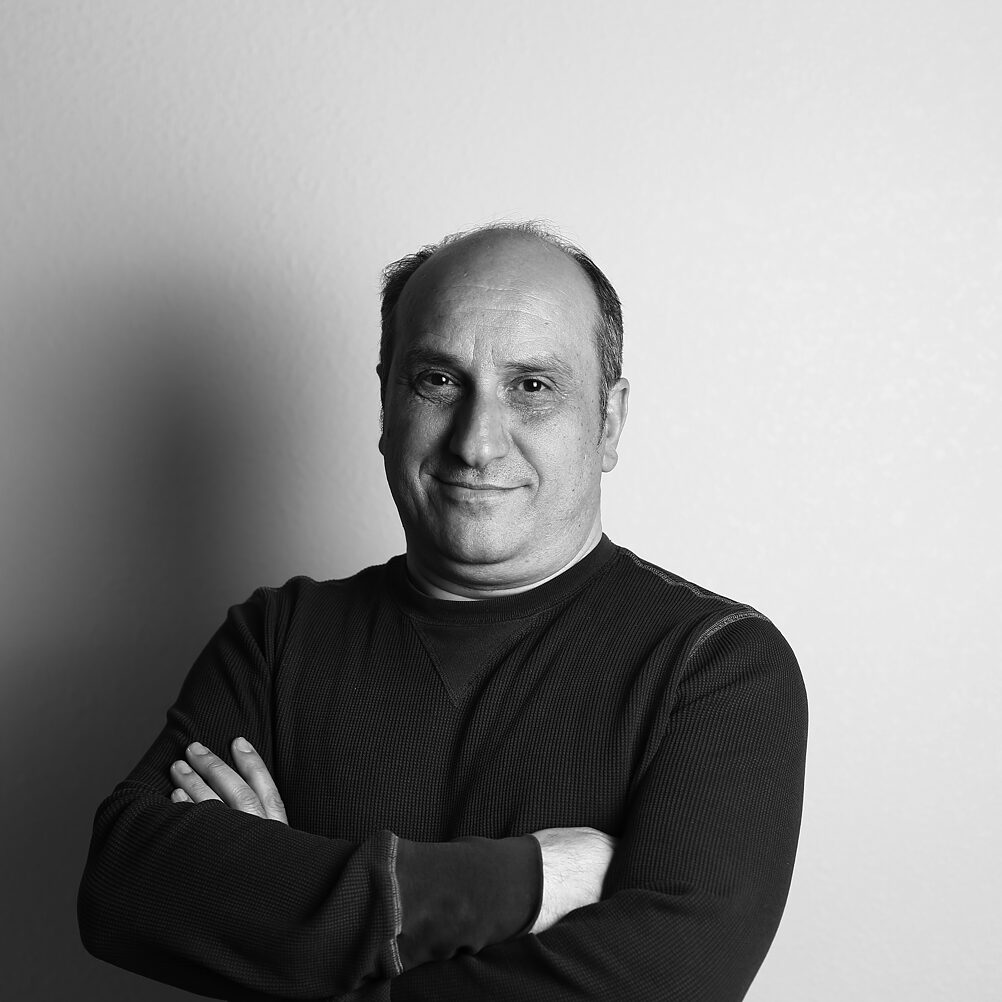
Lecturer: Ruben Arevshatyan
This workshop is intended for artists interested in Research-Based Art practices. As a contemporary art practice, Research-Based Art was formed in the development of conceptual art. Unlike scientific research, the purpose of which is to search for connections between phenomena, objects, facts, to reveal laws operating in nature, patterns in social relations, artistic research focuses on the fact of showing an attitude towards a real problem and interpreting it from a critical position. Such an approach requires multifaceted knowledge, which is not limited to art theory or history, but implies a broader optics of observation, a theoretical toolkit that allows revealing the connection of the topic with various contexts of reality (social, political, cultural, ideological, etc.). Being institutional in nature, Research-Based Art is performative from an operational point of view. This means that being credible and emotionally convincing is also paramount for a research artist. Therefore, while studying in a studio, a student must acquire the skills to represent and deliver this or that material expressively, along with the ability to research it.
Performance Practice Studies
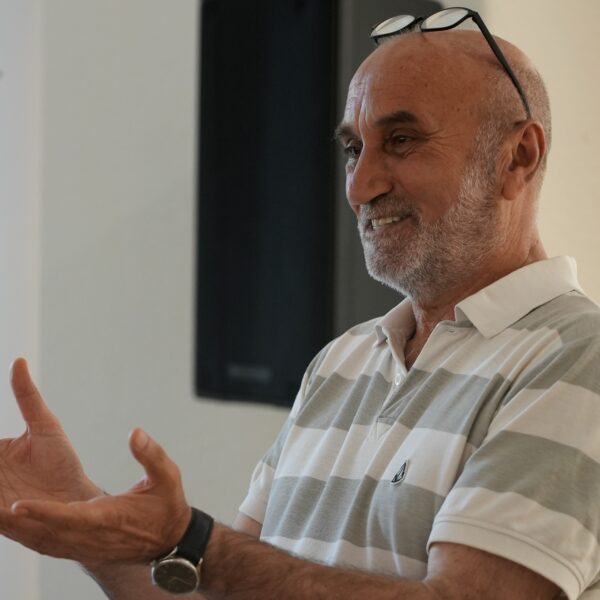
Lecturer: Nazareth Karoyan
This studio studies various performance practices (curation, criticism, collecting, archiving, etc.) that ensure the public circulation of works of art. Based on general theories created in the field of humanities studies (linguistics, gender studies, economics, management, programming, etc.) and taking into account the transformations taking place in the field of human activities, the study carried out in the studio focuses on the acquisition of a superior position of performance practices and its consequences. Postmodern theorists consider performance to be a semiotic modality that represents the spirit of the period of representation. Art, overcoming the division between object and person, appears in a single unified representation. There is no representation – there is no object or person, not even reality. This also raises the issue of studying the framework (structure, institution). The representation does not exist outside the framework. The framework is a derivative of the performance, the performance is a function of the framework. In addition to having the necessary knowledge to study performance practices, the student must be skilled and able to demonstrate himself in one of them upon graduation from the studio.
Visual Studies
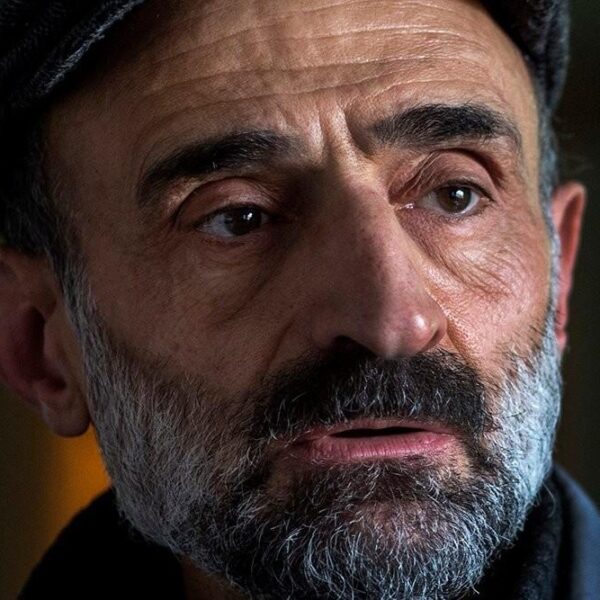
Lecturer: Hrach Bayadyan
The work of this studio includes the study of contemporary visual culture, images characteristic of the visual arts and the theories related to them, methods of description and analysis (e.g., ideological criticism, discourse analysis). How to understand works of art that speak a new and unfamiliar language, offer semiotic, narrative or rhetorical codes that resist accepted forms of decoding. How to read the messages of images or objects that are produced for non-aesthetic purposes or, using artistic forms, hide the demands that gave rise to them in the whirlpool of social life. Studying in the Visual Studies studio assumes such initial knowledge, abilities and skills, the further development of which will allow students to critically interpret texts produced in a variety of media: from fine art to photography and film, from advertising and fashion samples to various products of social networks.
Sociology
Lecturer: Hrachya Kazhoyan
Within the scope of this studio’s studies are the human, spiritual and social dimensions of art. Perfect works of art are sometimes so infectious that they find massive social circulation. From what human demands arises the attraction born from any historical novel, film or monument, which, opening as a square or a field of memory, is able to accommodate not only an individual reader, but also an entire society and people? Where lies the source of the communicative and medial potential of works of art? Being a renewable resource, to what extent is this potential manageable and can it be turned around and used to solve various problems faced by an individual, community, whole societies and humanity in general and build visions of the future? And what motivates people to engage in such practices of “high” art or amateur self-activity that use the medium of creative expression as a tool to transform the lives of individuals, groups, and societies? A graduate of the Art Institute will be familiar with research approaches to the public demand and impact of art, and in addition to interdisciplinary analysis between anthropology, psychology, and sociology, will be able to perform the contextual analysis necessary to develop an individual project.
Hrach Bayadyan
Ruben Arevshatyan
Nazareth Karoyan