Elaine Crowe is a lens-based artist living in Dublin. Her diverse background spans architecture, set design, street theatre, puppet-making, and arts education. Working primarily in film, photography, and print, her practice explores the experience of landscape through the concept of embodied cameras. She engages with the lens as a point of contact between body and place, questioning the gendered framing of landscape and seeking to reframe it through experimental, multi-channel installations and hybrid analogue-digital processes.
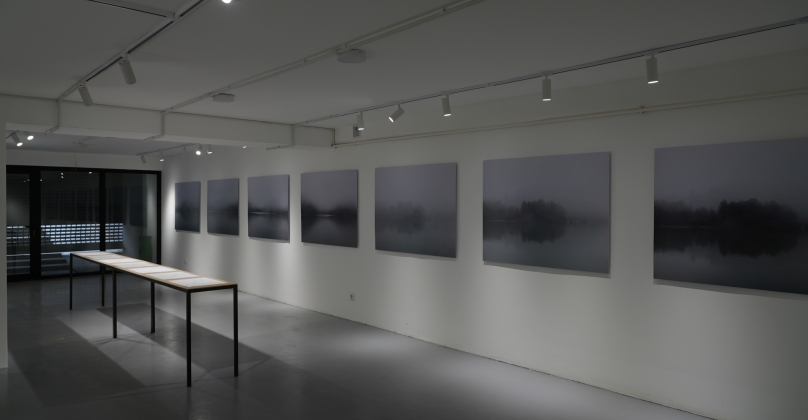
During her three weeks stay in our artistic residency, Elaine developed her personal project – an experimental film inspired by Yerevan. Elaine had already been in Yerevan twice in 2024 and since then she started learning more about Armenian culture. She’s been fascinated by many aspects of it, especially the architecture, on which she developed a series of prints.
This time, she chose to explore another different aspect, that of Armenian music. In particular, she learnt about the musician and composer Komitas, one of Armenia’s most celebrated figures.
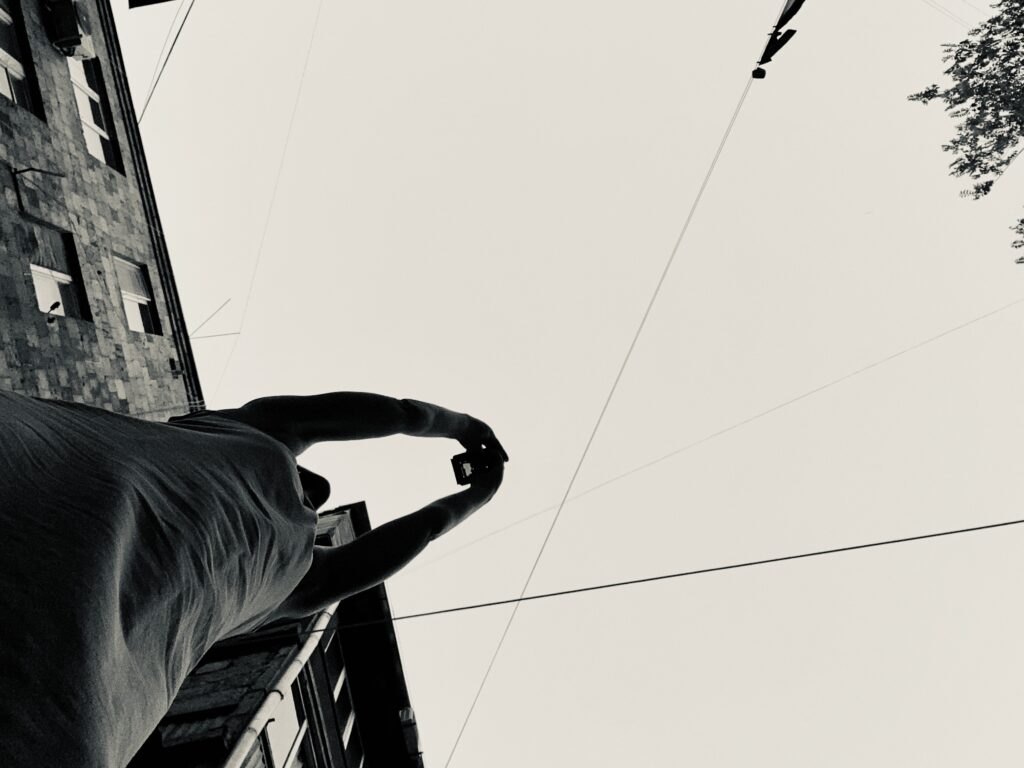
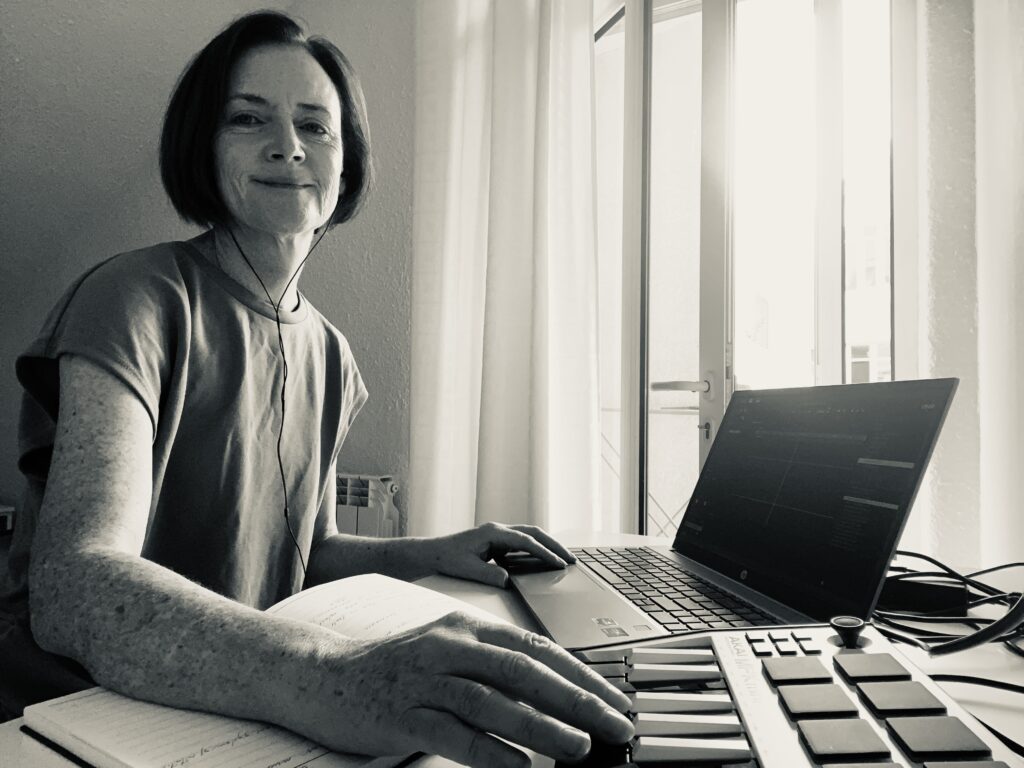
Elaine Crowe in the process of filming and recording around Yerevan
“What sparked my interest was that he collected hundreds of folk songs. Some of them were lost, as well as some of his writings and possessions. So, I asked myself: what are the folk songs of today? Is there any way that we could sort of make up for that deficit?”, she says.
Starting with these questions, Elaine began to work on an experimental film in which sounds play a key role: her aim was to let the city of Yerevan interact and play with Komitas’ music, recording sounds all around the city and weaving them together with fragments of his compositions.
Her first week was spent walking, listening, and recording. Armed with only her phone, a backpack of simple tools, and a keen sense of presence, she gathered the sonic material of daily life in Yerevan: cars passing fast on the streets, water flowing from one of the iconic drinking fountains, the subway, the dance of swallows in the sky. These sounds became the raw material to be layered with Armenian folk instruments and Komitas’ piano pieces, creating an acoustic dialogue between past and present.
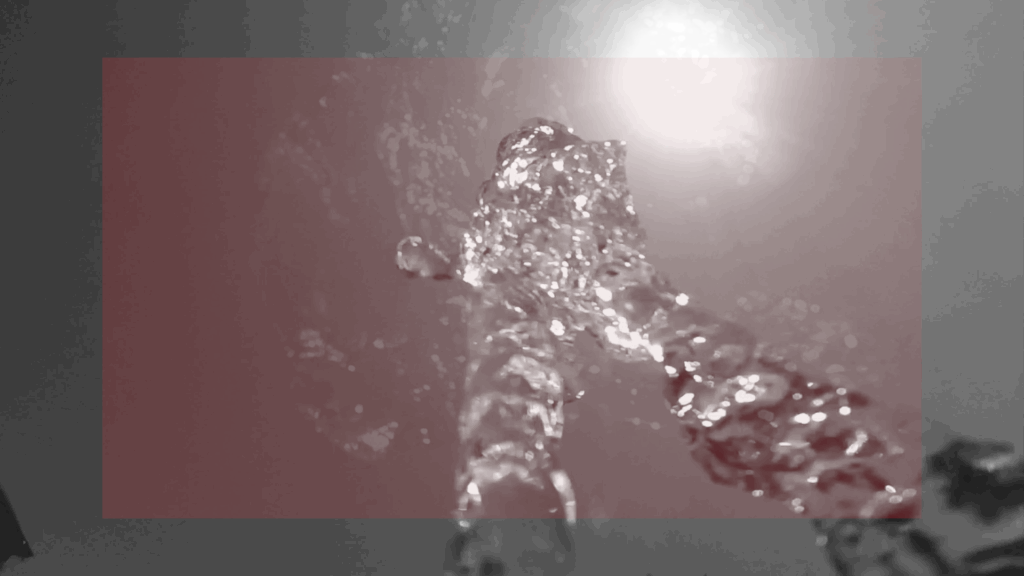
Still from the film
What fascinated her most was the contrast between Western harmonic traditions and the modal structures of Armenian music. “What’s interesting to me,” she explains, “is that when I work on combining the notes, I may have an inclination to follow the Western typical scale. However, Armenian traditional music doesn’t follow the same rules, and so it opens new ways of listening.”
Elaine’s film embraces simplicity in its visuals. Often, the camera looks upward, away from the ground and people, capturing the sky, the light, and fragments of architecture. She prefers single takes, resisting over-editing, while letting the soundscape carry the complexity. The visuals, tinted with a rose filter, underscore her awareness of being a visitor. “I am very aware that I am a Westerner with my lens, so I wanted to put a second perspective in the visuals and a filter that wouldn’t get lost. The rose-tint represents nostalgia for a place that you come to as a tourist, where you don’t see the harshness of daily life. I accept I have this lens as well.”
For Elaine, experimental filmmaking is profoundly physical. The camera is not a detached observer but an extension of her body, moving with her, breathing with her. She also works consciously with the frame, treating it not as a static boundary but as a layered and sometimes fuzzy edge, an active participant in the shaping of perception.
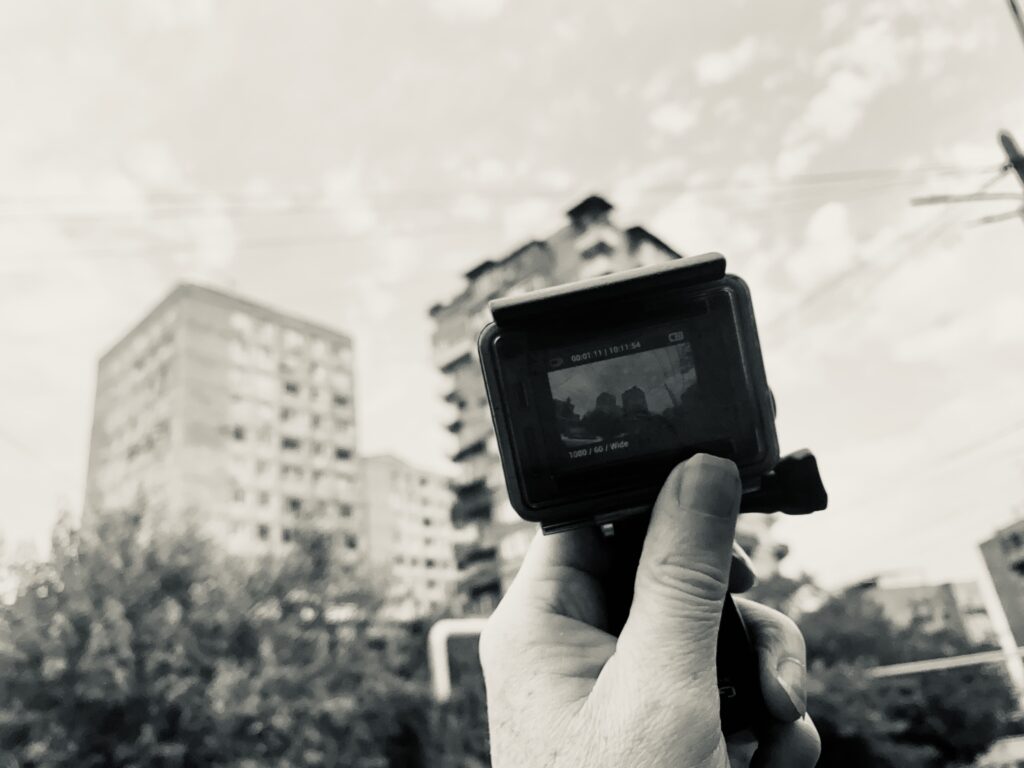
The camera, one of Elaine’s main tools
The piano patterns that emerge in her soundscape are derived from Komitas’ seven piano pieces. Through them, she builds a dialogue across time: between Komitas’ archive and Yerevan’s present soundscape, between Armenian modal structures and her own Western musical instincts, between the embodied camera and the disembodied echoes of history.
Elaine’s project is a modern urban symphony, an attempt to listen to Yerevan anew, to create a cinematic experience where viewers not only watch but feel themselves inside a shifting conversation of sound and movement. In doing so, she invites us to reflect on how places, history, and our own lenses shape the ways we see and listen to the world.
Chiara Ferrara
Intern at ICA Yerevan
Check out Elaine Crowe’s interview on our YouTube channel ↓