Tuan Mu &Lu Wei Dual Solo Exhibition: Echoes in Calligraphy
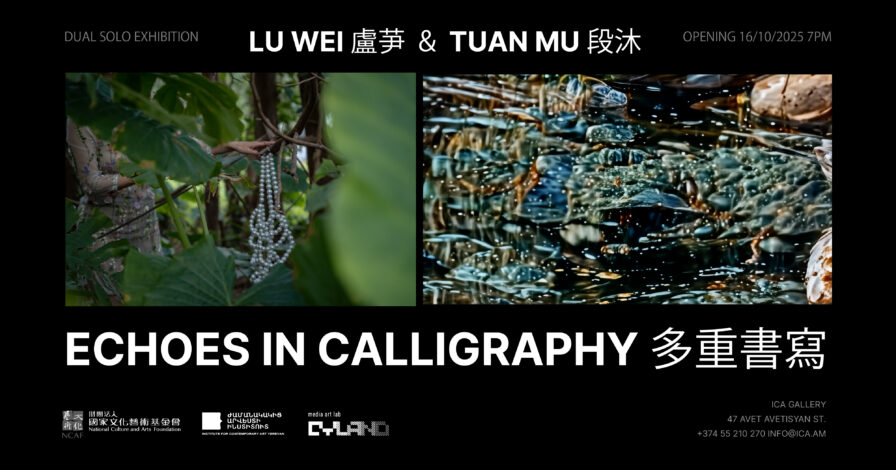
On November 16th, 7pm, we are pleased to invite you to the opening of the Echoes in Calligraphy – the Dual Solo Exhibition of Taiwanese artists Tuan Mu & Lu Wei.
Artists about the exhibition:
Writing, whether accumulated from bodily experience or generated by artificial intelligence, can no longer convey truth or knowledge. Rather, both approaches reveal the hidden relations underlying writing, the body, and the mind. In doing so, they put the essence of writing into question.
In this dual solo exhibition “Echoes in Calligraphy”, Taiwanese artists Lu Wei and Tuan Mu present video artworks developed from their ink painting practice, addressing themes of gender, the digital, mythology, and nature. The exhibited artworks reflect on the subject’s consciousness in ink arts, exploring how artists and viewers, through diverse modes of visual imagination, could transcend the limits of the physical body, allowing subjectivity to flow across different dimensions. By dissolving and reconfiguring the inherent symbolic meaning of images, the works unfold from difference, bringing forth each artist’s perspective on contemporary calligraphy and ink painting.
In his artworks, Tuan Mu seeks to reinterpret the traditional and unique worldview of Asian cultures through new media, and to explore, with a poetical approach, human perception and thought in the age of technology. In the exhibition, his video artwork “Astvats” draws on medieval Armenian manuscripts and religious texts, using AI algorithms to reassemble text and imagery. The work explores the stability of language as a vessel for faith, while reflecting on the potential of artificial intelligence to create new myths and languages. In “Calligrapedia : A Universal Algorithm”, the artist combines Chinese calligraphy, natural imagery, and oral storytelling, using machine learning to reconstruct forms of writing, flowing between humans and all things.
Lu Wei’s artworks reference cross-cultural female symbols and the figure of the mother, in reflection of her embodied experiences of being both a woman and a mother. Her three-channel video installation “Mirrors” combines poetry, calligraphy, and performance. Using the distinctive visual language of ink and a feminine perspective, the work reinterprets the concept of “shadow” through moving images. “Mirrors” explores religion, literature, mythology, and the archetype of the mother from multiple perspectives, aiming to examine and heal female figures who, throughout history, have been both creatively inspiring yet burdened with negative associations. The work symbolically depicts the artist’s experience of pregnancy and motherhood, while also reflecting on the multifaceted nature of motherhood. It considers how the unique shadow-like qualities of ink as a medium seep into the visual language of video.
The exhibition “Echoes in Calligraphy” seems to open multiple windows onto this question of writing: when life experience, memory, and symbols are reassembled and regenerated through the artists’ practice, how might we reimagine the subject, meaning, and methods of writing?
About the Artists
Lu Wei (Taiwan, b.1994) is a visual artist and curator based in Taipei. She received both her BFA and MFA in Fine Arts from Taipei National University of the Arts. Her practice encompasses ink painting, installations, artist’s books, handscrolls, and folding screens. Drawing on religious, literary, and mythological figures as well as archetypes of motherhood, her works explore symbols of women across cultures to reflect on her own experiences as a woman and mother. While rooted in the traditions of ink painting, her work incorporates feminist thought and gender issues, seeking to reinterpret and expand understandings of gendered bodies and their images within the history of ink.
In 2023, Lu Wei was artist-in-residence at Grey Projects in Singapore, a collaborative multi-year program with Perth Institute of Contemporary Arts, sponsored by the Asia Pacific Exchange Program and Taipei Artist Village. Lu Wei was awarded several important grants, including the grants from Taiwanese National Culture and Arts Foundation, and the Taiwanese Ministry of Culture. In 2023, Lu Wei was awarded a grant from Taiwanese Ministry of Culture, which included a three-month artist residency at 18th Street Arts Center in Los Angeles, CA. In 2024, she was awarded a grant from Taiwanese National Culture and Arts Foundation for a 5 months curatorial project in Utah. During her stay in the United States, Lu Wei exhibited her solo show My Sole Desires at Material in Salt Lake City, UT, and the Utah Museum of Fine Arts (UMFA) acquired two of her artworks for their permanent collection. The Taiwanese American Foundation also acquired several of Lu Wei’s paintings as part of their permanent collection. In 2025, with the support of the Ministry of Culture and the National Culture and Arts Foundation, she became the first Taiwanese artist to hold dual solo exhibitions at Material and Ogden Contemporary Arts in the United States. These exhibitions received primary sponsorship from significant American institutions, including the Andy Warhol Foundation for the Visual Arts, the Utah Division of Arts & Museums, the George S. and Dolores Doré Eccles Foundation, Ogden Arts, Rocky Mountain Power, and the Utah Office of Tourism. The shows were also featured in prominent U.S. contemporary art publications such as Southwest Contemporary, The Utah Review, and 15bytes Utah’s Art Magazine.
Lu Wei has participated in numerous group exhibitions in galleries and museums, including, Center of International Contemporary Art (Vancouver, Canada, 2025) Ames Yavuz (Singapore, 2025), ER Gallery (Taipei, Taiwan, 2024), Absolute Space for the Arts (Tainan, Taiwan, 2023), OUR Museum (New Taipei City, Taiwan 2022), Silpakorn University (Bangkok, Thailand, 2022), Academy of Fine Arts in Prague (Prague, Czech Republic, 2022), SOKA Art (Tainan, Taiwan, 2021), Mezzo Art (Tainan, Taiwan, 2021), Taipei Artist Village (Taipei, Taiwan, 2020), and AKI Gallery (Taipei, Taiwan, 2020). She is also a recognized and celebrated curator with several national and international exhibitions, including shows at Taitung Art Museum (Taitung, Taiwan, 2023) for which was nominated for the 22nd Taishin Art Award, MOCA Taipei (Museum of Contemporary Art in Taipei) for which she received the “curator’s incubator program @museums” grant from the National Culture and Arts Foundation, and at Taiwan Contemporary Culture Lab (C- Lab) for 2023’s Taiwan Annual.
Tuan Mu (Taiwan, b.1994) is an artist and independent curator based in Taipei. He graduated from Taipei National University of the Arts with a major in Ink Painting. His work explores how new media can reinterpret the worldview of traditional Asian culture, adopting a poetic approach to human perception and thought in the age of technology. His practice draws on Buddhist and Taoist philosophies, East Asian animism, and mythological tales, combining artificial intelligence, virtual reality, animation, sound performance, ink painting, and calligraphy to create transdisciplinary narrative structures that engage viewers in dialogue.
His artworks have been presented internationally, including at Durres Biennale, Athens Digital Arts Festival, Asia Digital Art Exhibition, CutOut Fest, Miami New Media Festival, Now & After International Video Art Festival, Venice Immersive Market (Taiwan Pavilion), Festival ECRA, CineGlobe Film Festival, CYFEST Media Art Festival, and International Digitalkunst Festival.
As a curator, Mu’s projects emphasize cross-cultural research and identity issues in contemporary contexts, often involving fieldwork with curators, artists, and local communities. His curatorial proposals have been selected for SLY Art Space’s Emerge Curator Project and the NCAF Curator’s Incubator Program, and nominated for the Taishin Art Award. Recent curatorial projects include Home: Foundation, Wall Cancer, Skin, and Shelter (Taitung Art Museum, 2023), Humus (MOCA Taipei, 2023), and Beyond Interfaces—Taiwanese Video Program (Mirzoyan Library, Armenia, 2024).
Artist’s website
Mirrors, Lu Wei
3-Channel Video Installation, HD, Color, Stereo, 11’15”, 2025
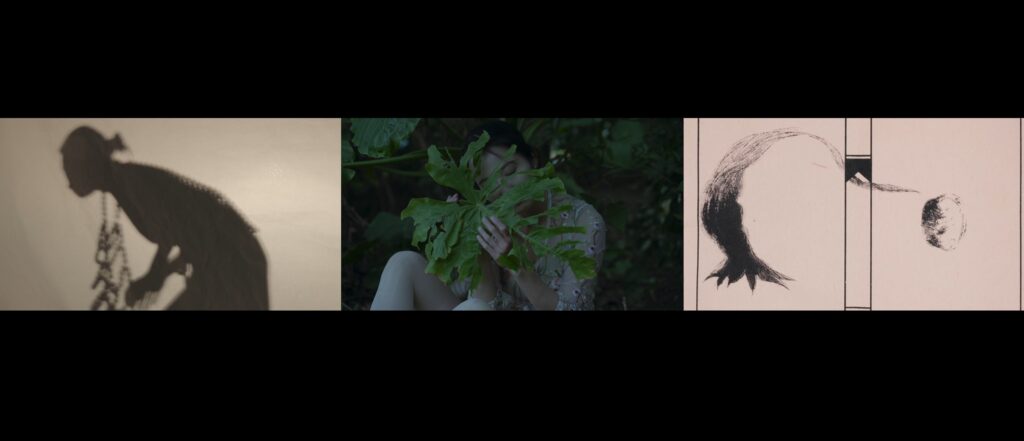
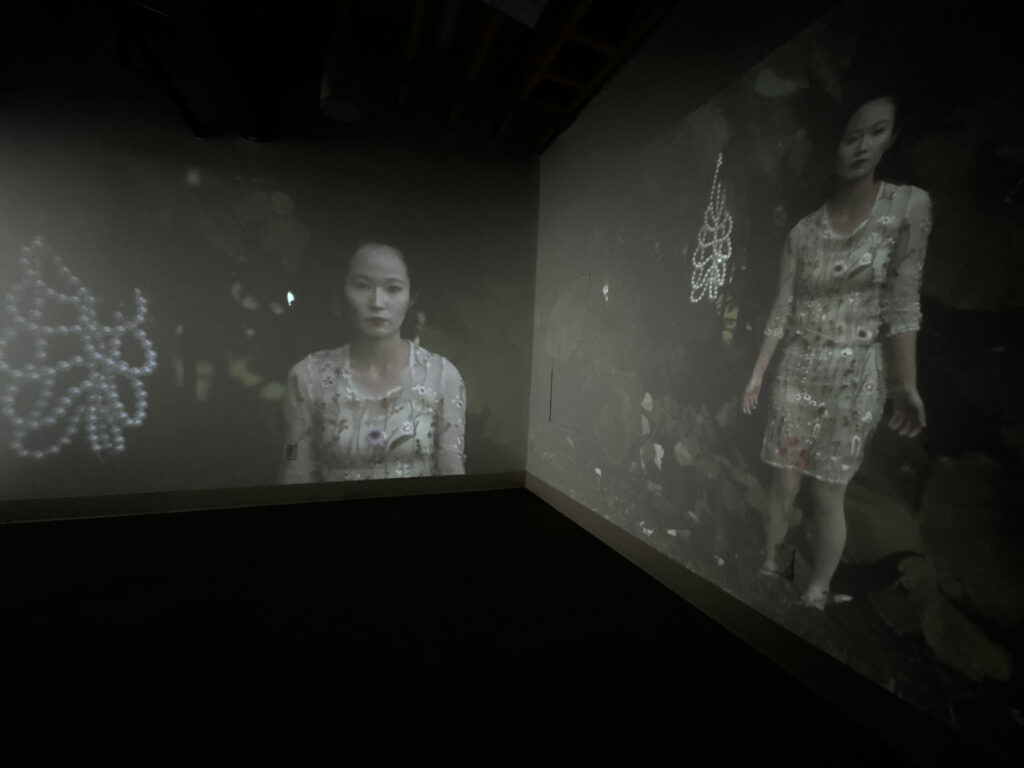
The piece unfolds through three interwoven narratives: the deliberate hand movements involved in ink painting, the ephemeral silhouettes of shadow play, and a performance depicting a figure’s journey into and out of a forest, a symbolic representation of the womb. These elements collectively portray motherhood as a series of reflective spaces, akin to multiple mirrors, where identities appear and disappear across various interfaces.
Central to the work is the use of traditional ink painting, whose unique shadowy qualities inform the visual language of the video. This medium serves as a conduit for interpreting the ineffable “shadows” associated with the maternal experience, offering a feminine perspective that bridges past and present.
Astvats, Tuan Mu
Single-Channel Video, Generative AI, 4K, Color, Stereo, 12’20”, 2025
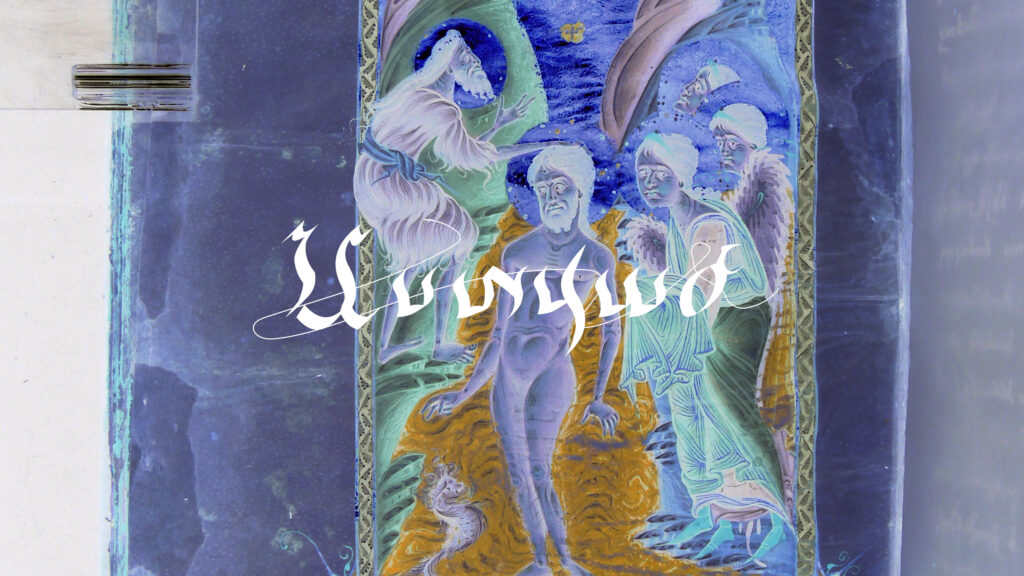
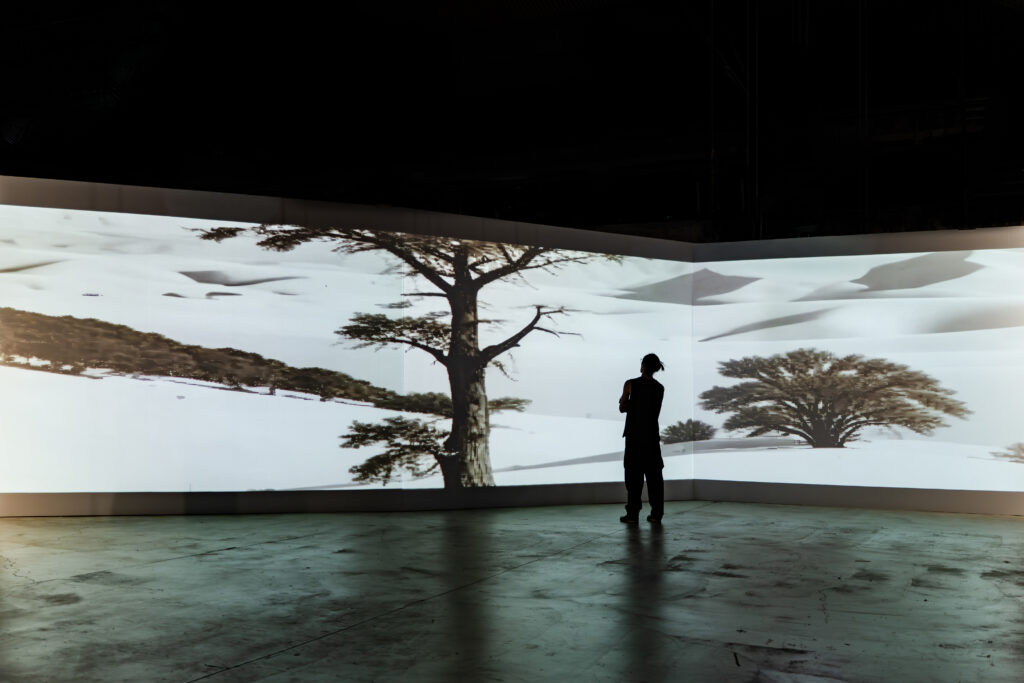
Astvats is a video artwork that combines generative Artificial Intelligence (AI), on-site video footage, and medieval manuscripts. Based on the collections of the Matenadaran (Mesrop Mashtots Institute of Ancient Manuscripts), the artwork employs generative AI to reinterpret the medieval manuscripts of the Old Testament and the Gospels, and to invent a myth about the language of artificial intelligence. The artwork presents the process through which AI constructs language as a metaphor for the “theft” of human words. Against this backdrop, the relationship between large language models and human languages is exposed as a paradox: on the one hand, the results generated by AI can only be obtained by disassembling or imitating existing texts; on the other hand, it can through this very process create forms of languages that surpass human comprehension and control. Here, ‘stealing words’ and ‘creating words’ become twin concepts, virtually inseparable.
The story begins with two children from the Tower of Babel. Stealing and imitating the other’s words in an attempt to create a language of their own, their actions disturb the stability of language. Across the blurred linguistic landscape of large language models, they chase one another, circling ever closer. From the chaos of language, a war erupts. Bodies fallen on the battlefield weave the words of a new script, difficult to decode, harder still to parse: a Bird Script (Trchnakir / Թռչնագիր) suspended between “alphabet”, “algorithm” and “living organism”. The Bird Script here is not a fabrication, but a distinctive ornamental script found in medieval Armenian manuscripts. In the traditional sense, bird shapes were used to transform writing into spiritual forms, and were most often found in religious classics. In Astvats, the once motionless decorative letters are transformed by generative AI into ever-shifting textures resembling scriptures and neural networks interlaced, still carrying a residue of the divine as they manifest the stochastic oscillations of the algorithm. This particular script becomes the metaphor for the instability of language: “In the age of artificial intelligence, language no longer solely belongs to humans, but instead enters a ‘blurred language ecology’, somewhere between the organic and the technological”. As the story closes, the narrator places the viewer in front of a manuscript of Genesis. From there, the myths of artificial intelligence and of humankind unfold in succession, forming the loop of an eternal return.
Astvats, the title of the artwork, derives from the Armenian word for “God” (Աստված) and evokes the origins of Armenian script and its deep ties to religion. The Armenian alphabet was created in the 5th century AD, by the theologian Mesrop Mashtots, for the purpose of translating the Bible into Armenian. By referencing the history of Armenian in relation to AI’s systems of language generation, Astvats reveals the following: within the algorithms of large language models, language is endlessly reassembled and reproduced, and its claims to ownership and sanctity perhaps no longer exclusively human.
Astvats does not seek to create a myth “ex nihilo”. Rather, in weaving together faith, folktales, the history of writing, and large language models, it reproduces myths by moving from “the existing to the many”. Ultimately, the artwork poses the question: once language and writing are no longer exclusive to human beings, how should we approach co-authoring new myths with artificial intelligence? This concern speaks to how language is being redistributed across technology, culture, religion and power, and how this will, in turn, define humankind’s understanding of its relationship with artificial intelligence.
Calligrapedia: A Universal Algorithm #2, Tuan Mu
Single-Channel Video, Generative Adversarial Network, Full HD, Color, Stereo, 2’42”, 2024
“A stroke may be massive as collapsing storms or feathery as cicada wings;
guiding the brush as if bringing forth springs,
stopping it as if standing steadfastly like mountains;
delicate as the waxing crescent rising over the horizons,
dispersed as the countless stars arrayed across the universe.”
-A Narrative on Calligraphy, Sun Guoting
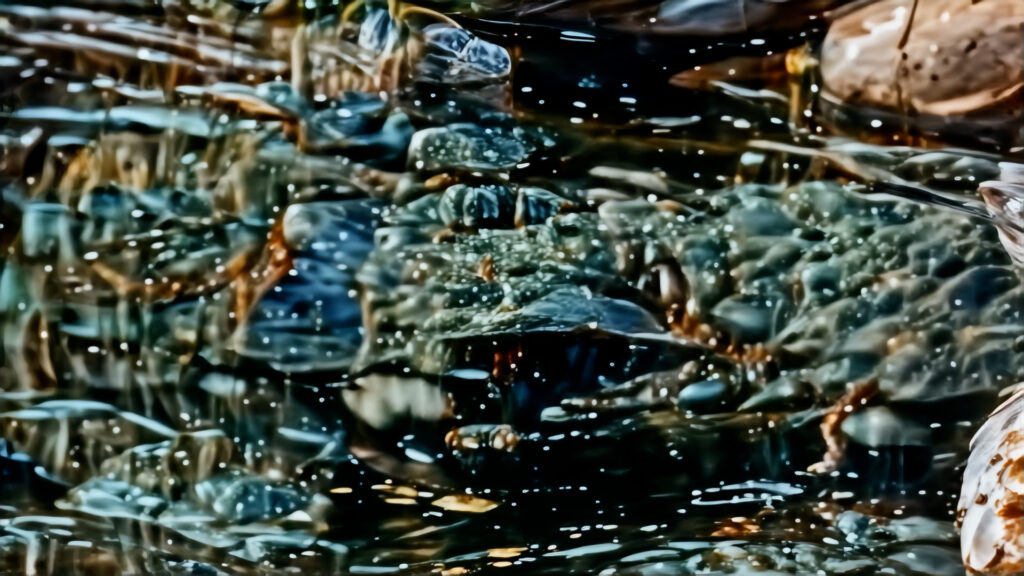
Based on the artist’s experience of practicing “A Narrative on Calligraphy” for many years, Calligrapedia: A Universal Algorithm #3 utilizes a machine learning model called Generative Adversarial Network (GAN) to analyze a large number of calligraphy drafts. Drawing inspiration from natural elements such as landscapes, animals, and plants, it has developed a series of human-machine-made Chinese characters that flow between script and organic things. On the other hand, through collaboration with a folk tale narrator, it reinterprets ancient oral stories passed down worldwide with “qualitative transformation” as its core.
Deconstructing machine learning’s aspects of image style recognition and simulation, Calligrapedia: A Universal Algorithm #3 explores how words, language, and mythological narratives in human history continuously interpret themselves through learning from the world around them. The work constructs an intertwined view of human-machine-nature interaction.
Calligrapedia: A Universal Algorithm #3, Tuan Mu
Single-Channel Video, Generative AI, Full HD, Color, Stereo, 3’05”, 2024
“A stroke may be massive as collapsing storms or feathery as cicada wings;
guiding the brush as if bringing forth springs,
stopping it as if standing steadfastly like mountains;
delicate as the waxing crescent rising over the horizons,
dispersed as the countless stars arrayed across the universe.”
-A Narrative on Calligraphy, Sun Guoting
Based on the artist’s experience of practicing “A Narrative on Calligraphy” for many years, Calligrapedia: A Universal Algorithm #3 utilizes a machine learning model called Generative Adversarial Network (GAN) to analyze a large number of calligraphy drafts. Drawing inspiration from natural elements such as landscapes, animals, and plants, it has developed a series of human-machine-made Chinese characters that flow between script and organic things. On the other hand, through collaboration with a folk tale narrator, it reinterprets ancient oral stories passed down worldwide with “qualitative transformation” as its core.
Deconstructing machine learning’s aspects of image style recognition and simulation, Calligrapedia: A Universal Algorithm #3 explores how words, language, and mythological narratives in human history continuously interpret themselves through learning from the world around them. The work constructs an intertwined view of human-machine-nature interaction.