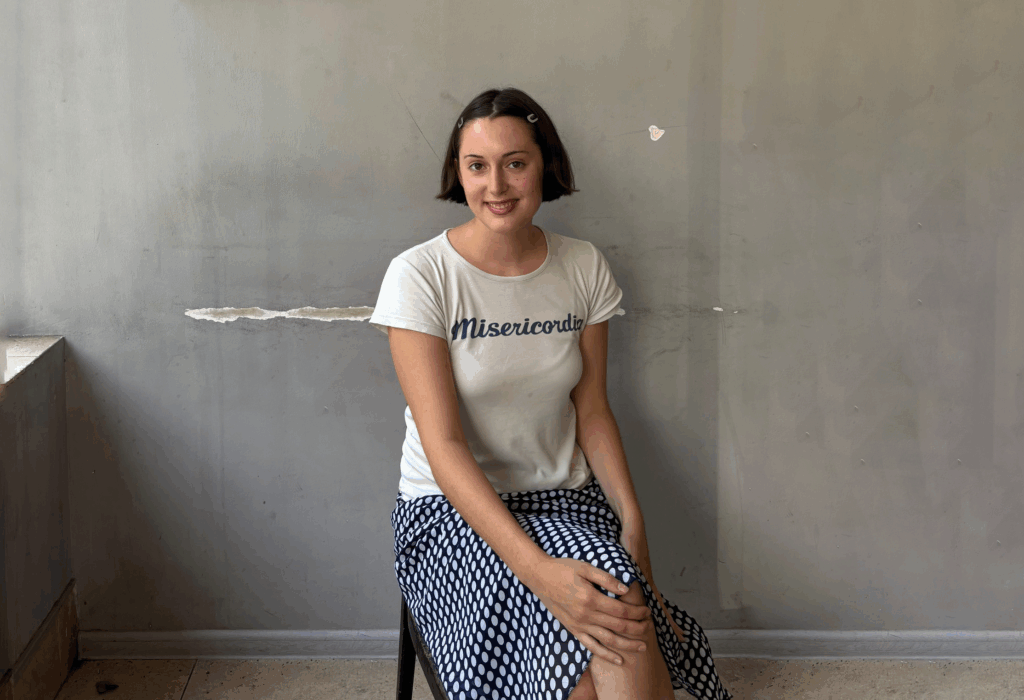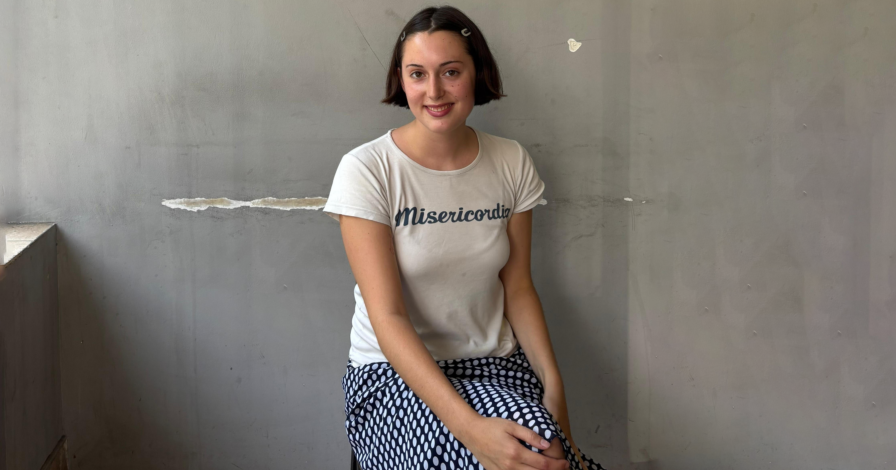
Rita Batievsky (Barcelona, 2004) is a visual artist currently based in Amsterdam, where she studies Fine Arts at the Gerrit Rietveld Academie and works part-time as a teacher. Raised in a multicultural household with Peruvian and Mallorcan roots, Rita embraces the idea of an unfixed identity. “Like a swallow, I am built to peregrine”, she wrote during her two-week stay at our NEST Art Residency in July 2025.
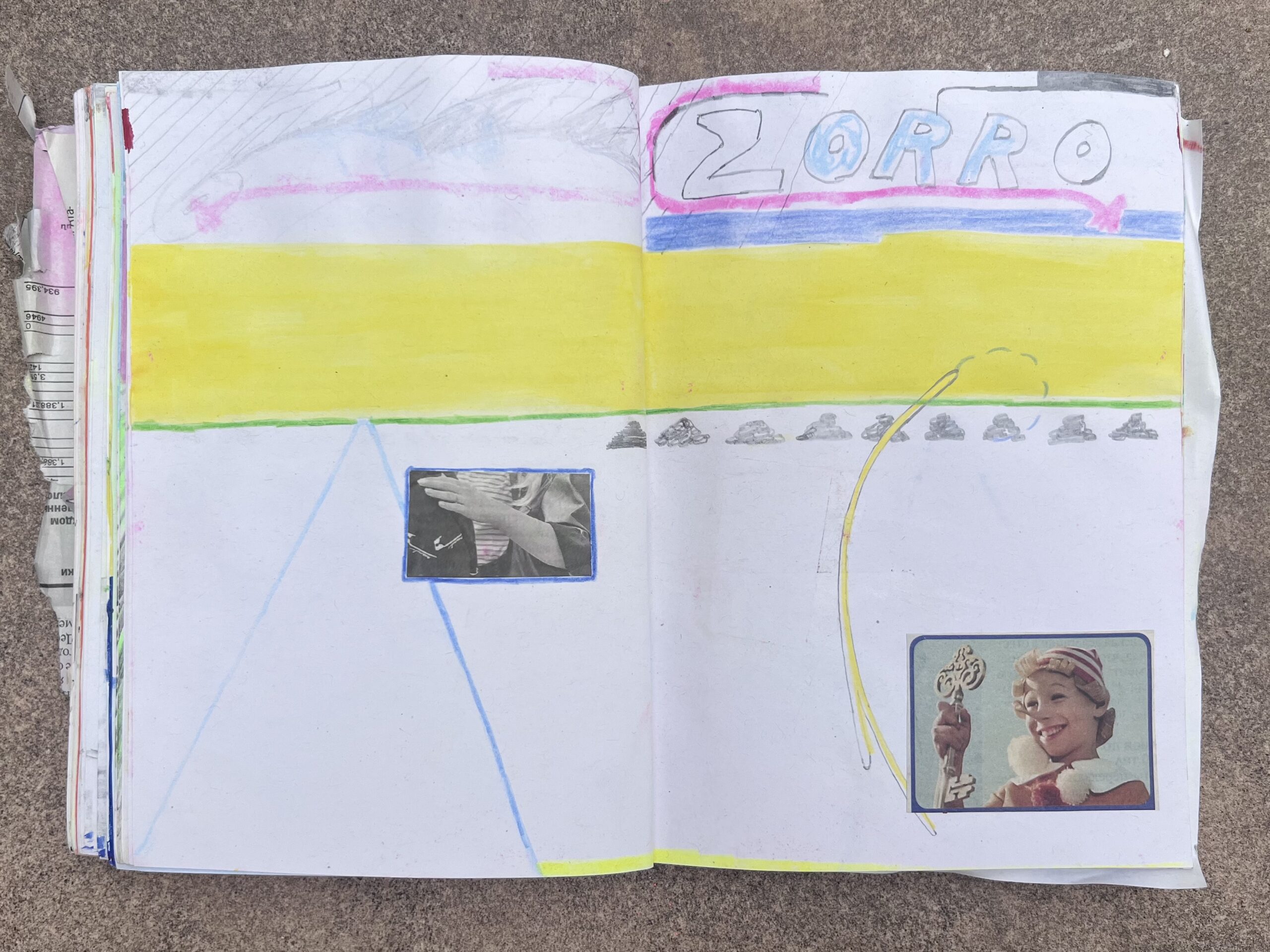
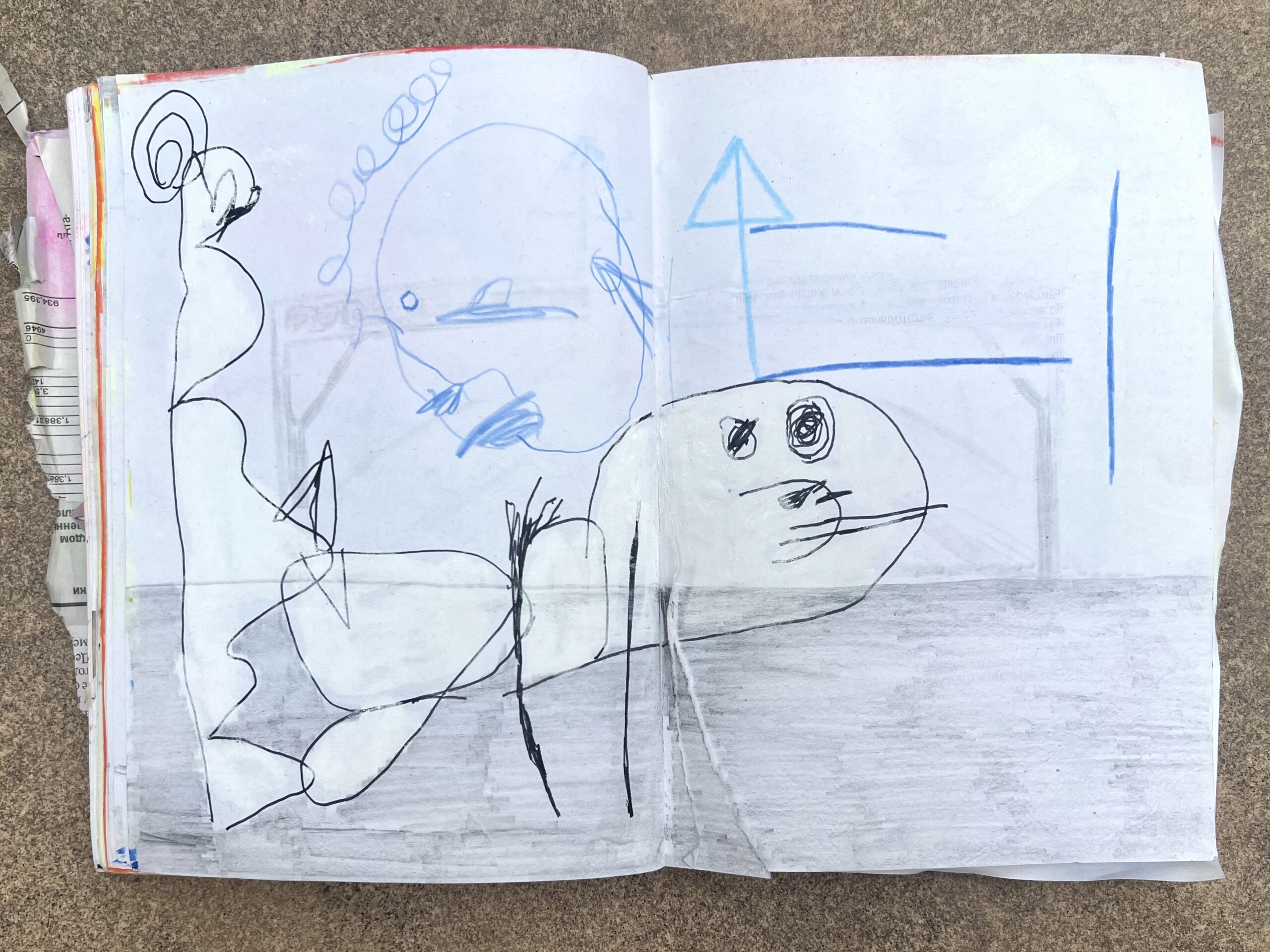
Though she has worked with various media throughout her artistic path, Rita’s practice during the residency focused mainly on writing and painting – two art forms she constantly interweaves. Text and image run parallelly in her notebook, which serves as her personal archive and ever-evolving artistic project. She has indeed collected over a hundred notebooks of the same size already. With an almost anthropological gaze, she meticulously observes details of her surroundings, reworking them in the form of poems, descriptive texts, images. Fleeting scenes of everyday life feed the imaginary spaces of her drawings: a bird singing too loud, an apricot that suddenly splashes on the ground, a family reunited to chop a chicken in the streets of Kond, the flickering liveliness of a playground.
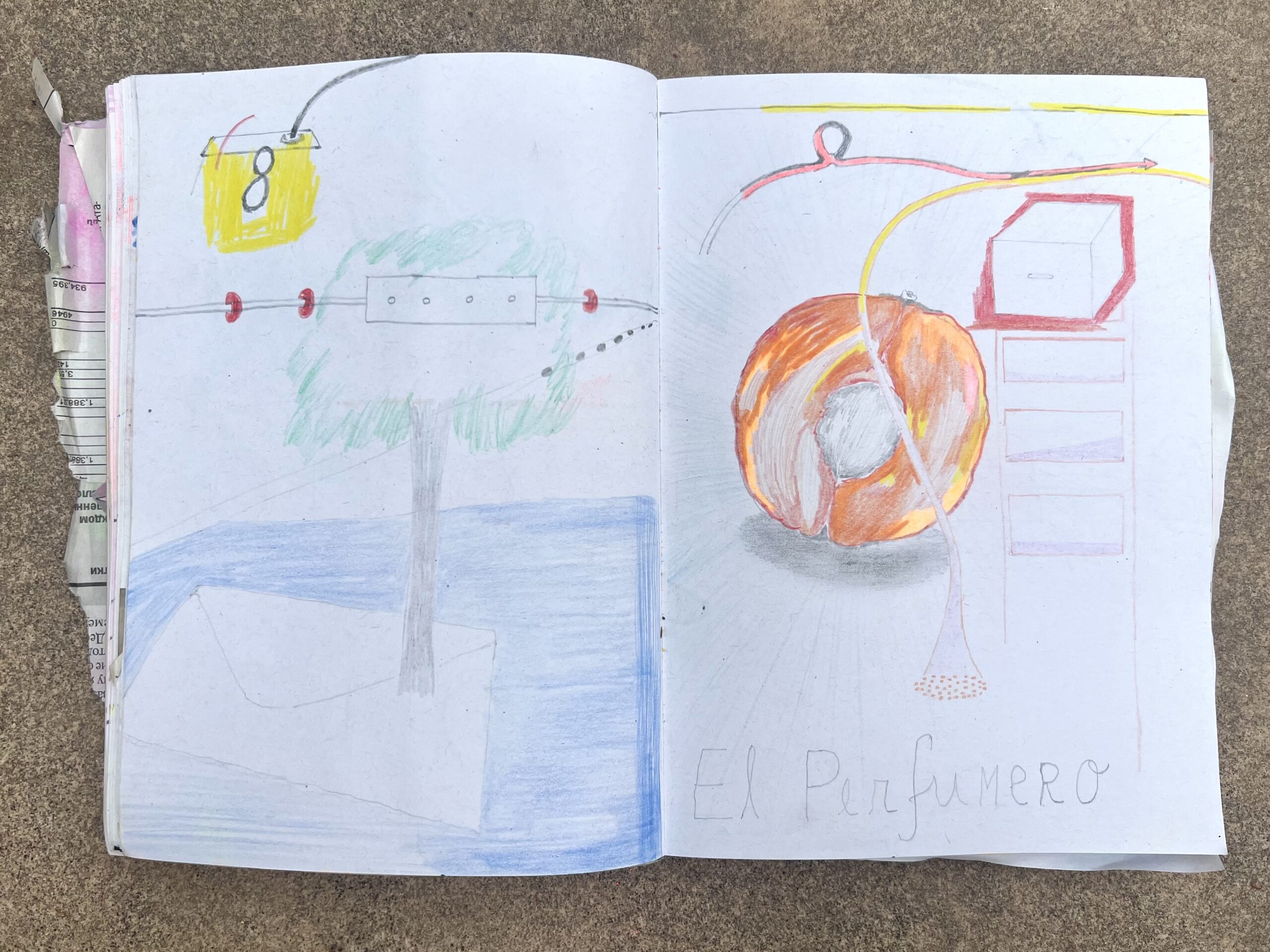
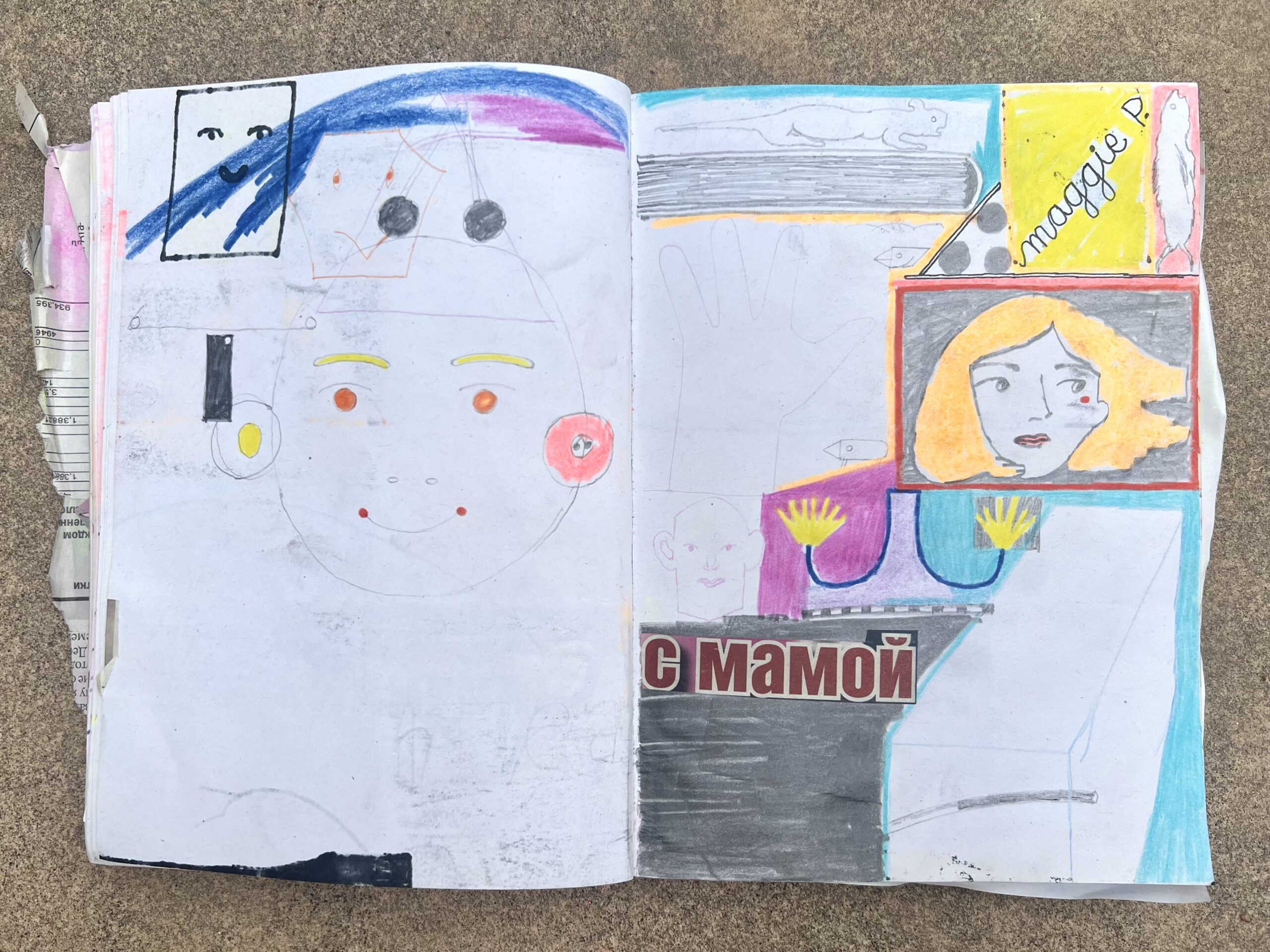
Her work reflects a desire to dive into the lives of others. But how far can observation take us? When engaging with unknown places and people, we are merely observers, inevitably encountering linguistic, social or cultural barriers. And it’s when those limits are reached that fiction intervenes. Her work acknowledges that we may never fully access the stories of others, but that very impossibility becomes the ground of creative invention.
During her time in Yerevan, Rita has found herself using online translation tools a lot, which served both as a way to engage in conversations with locals, as well as translating written signs that shape the sociolinguistic space of the city.
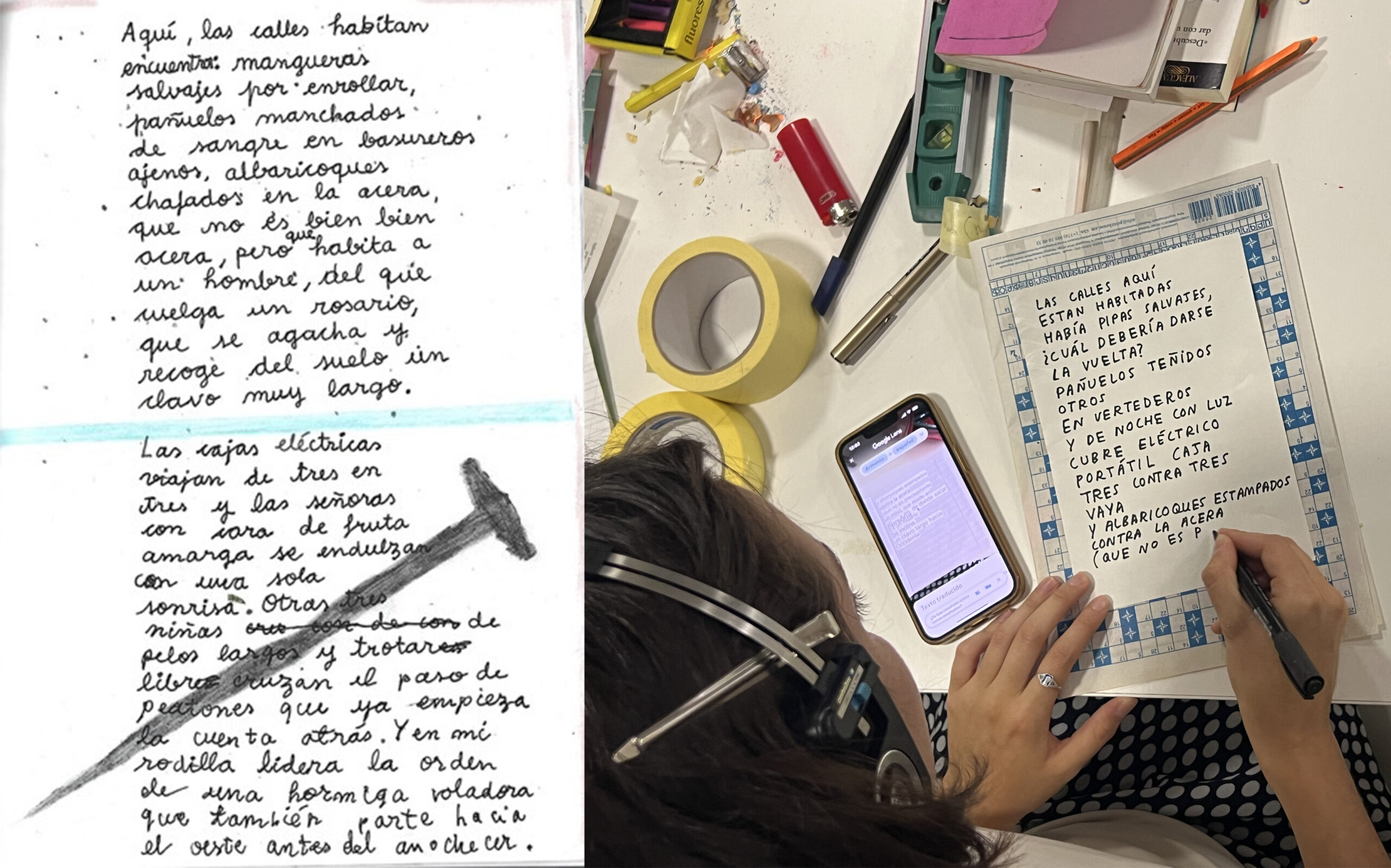
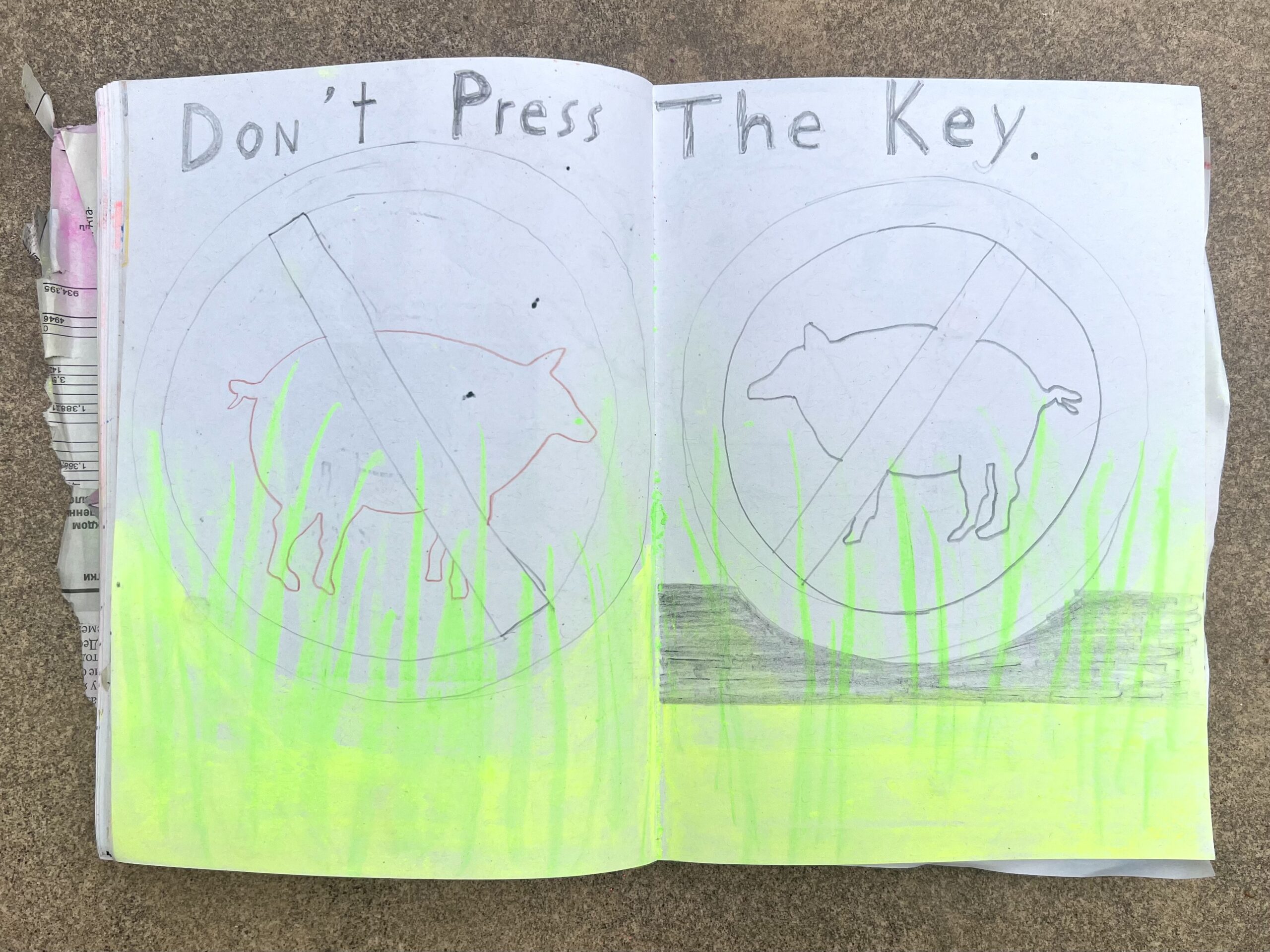
A poem that Rita wrote about her time in Yerevan was translated from Spanish into Armenian and then re-translated back to Armenian using an online translation tool. The outcome was surprising and created new meanings and sentences: for example, the Armenian “Don’t throw trash” sign found in the streets was translated in English as “Don’t press the key”.
She explores the uncanny distortions and the poetry that merges through mistranslation, reworking conversations and poems across languages: Armenian, Russian, Spanish, English. Her process embraces the concept of misunderstanding, using it as a creative space to reflect on how much can be found, rather than lost, in translation. Therefore, her process does not aim at decoding the world, but rather re-encoding it, inviting signs of surroundings to mutate and carry new associative meanings in her paintings and poems.
One of the most interesting aspects of Rita’s artistic practice is her interplay between text and image. Words and visuals in her work are not tautological, explanatory of one another, but rather complementary, each extending the resonance of the other. The evocativeness of text complicates the immediacy of visuals. Collage is a key part of this process. She has indeed gathered some Armenian pastime books or Russian newspapers to incorporate in her artworks, letting pre-existing images and language seep into the composition.
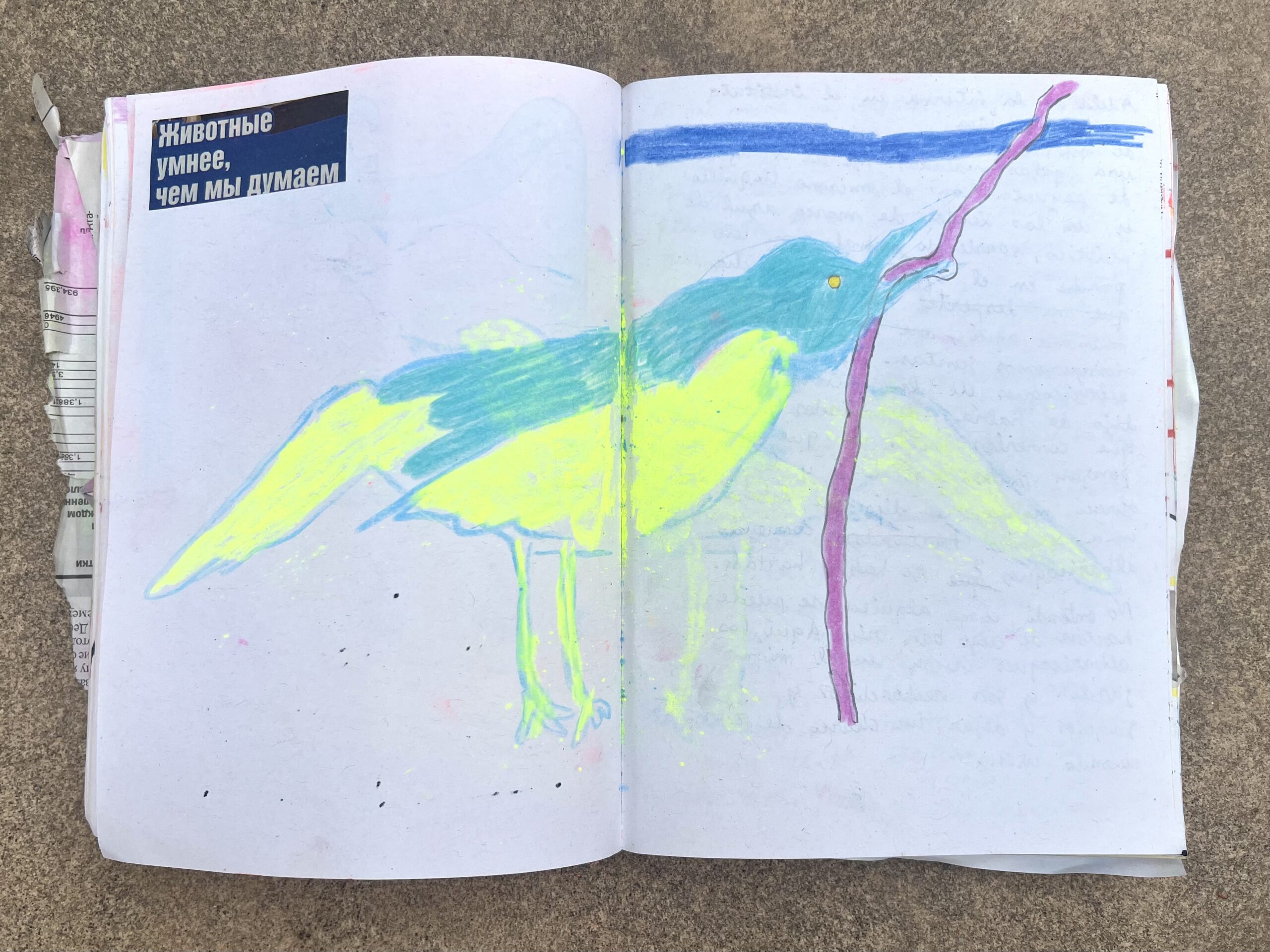
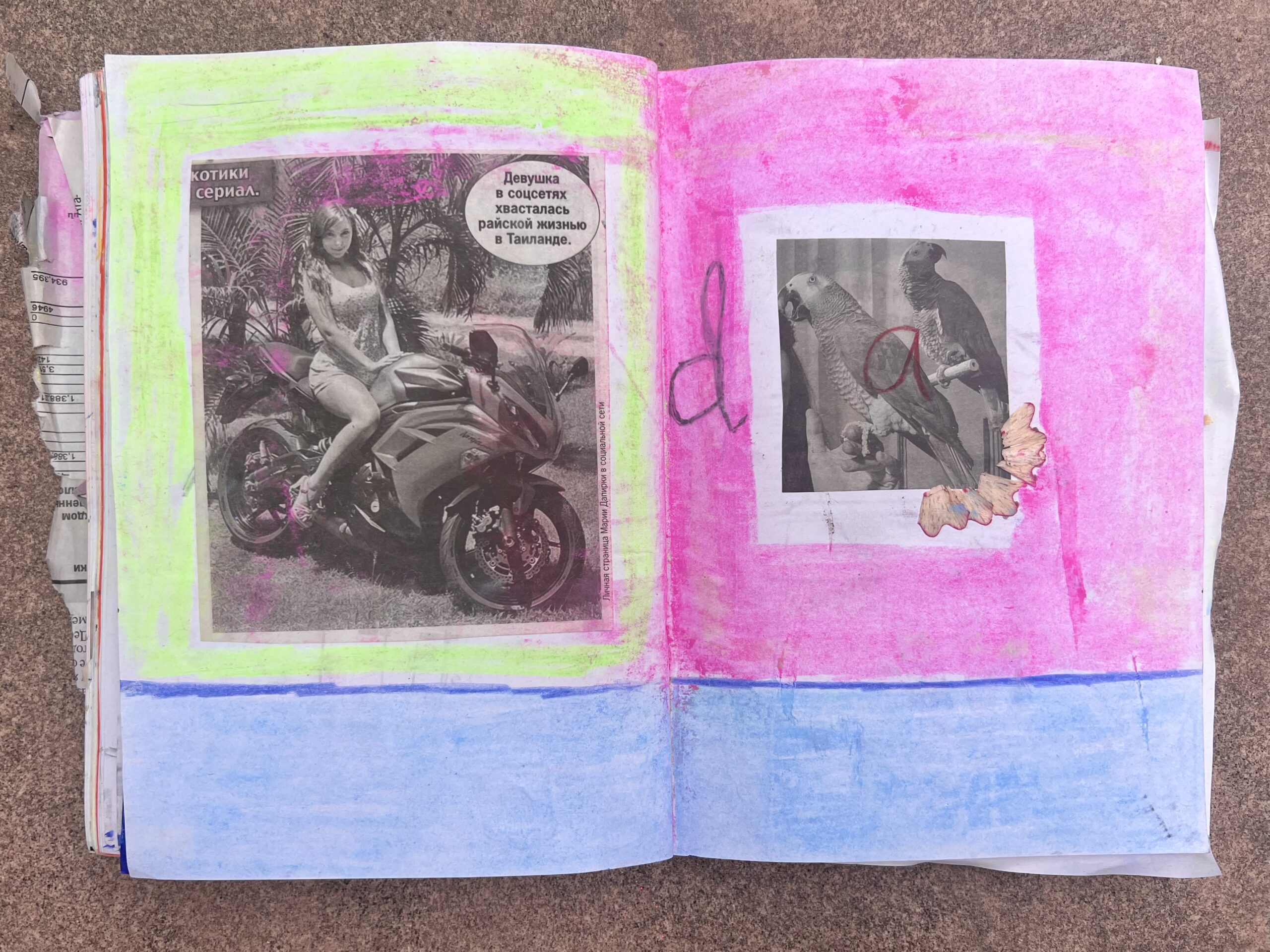
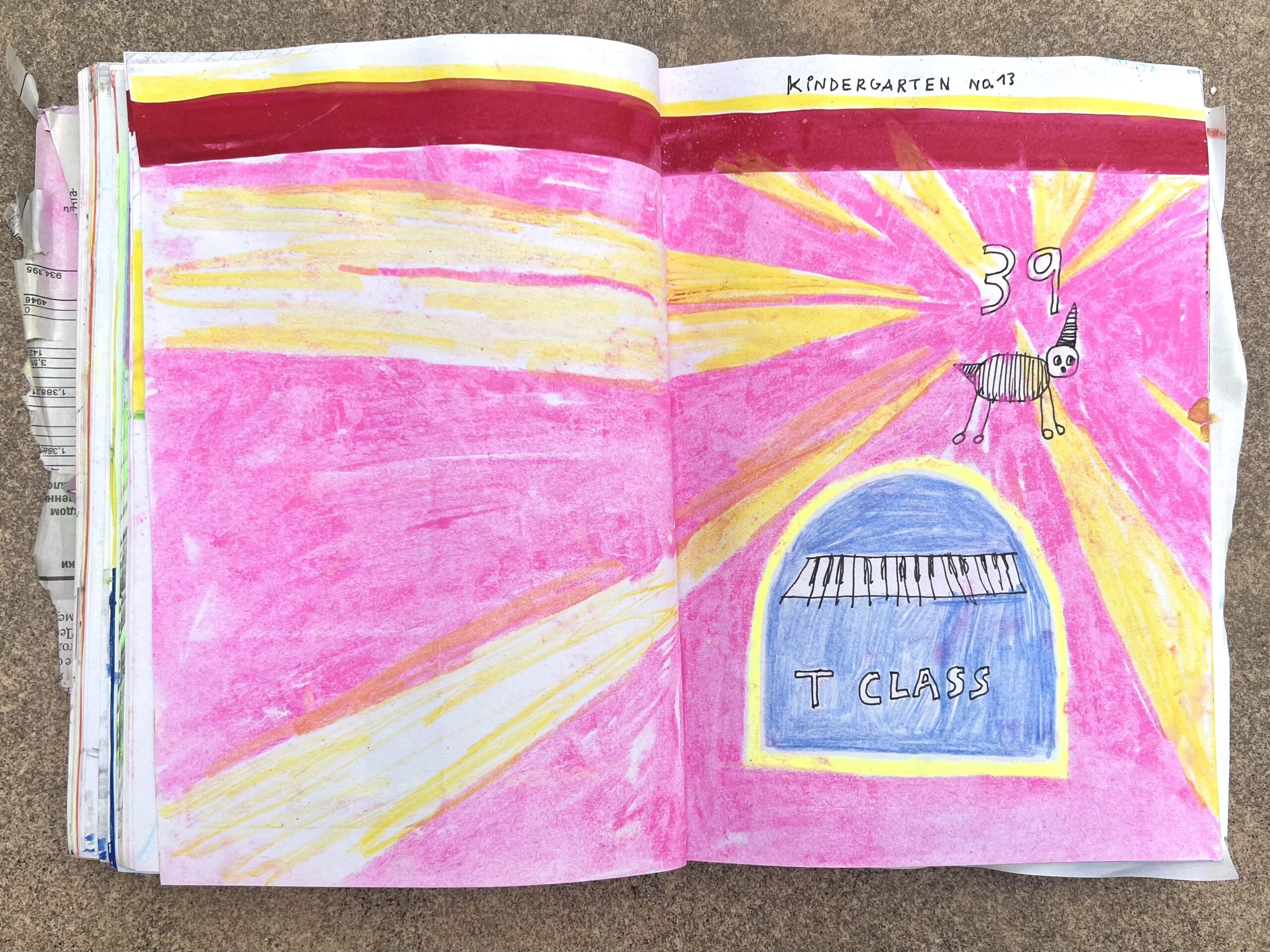
Her final project for the NEST Art Residency is titled Kindergarten n.13, named after a small school she discovered during her wanderings in the Arabkir district. She spent time in the courtyard observing life unfold. Sitting there, she noticed the abundance of chalk drawings on the walls, overlooked artworks in their own right. These spontaneous marks found in the streets became a starting point. She copied them into her notebook, later integrating them with chalk pastels into four canvases alongside fragments of local newspapers. In this sense, her approach suggests a rethinking of artistic intentionality. Rather than asserting a fully authored vision, her practice reveals a porous subjectivity, one shaped by the “ready-made” signs and “unwritten stories” of others.
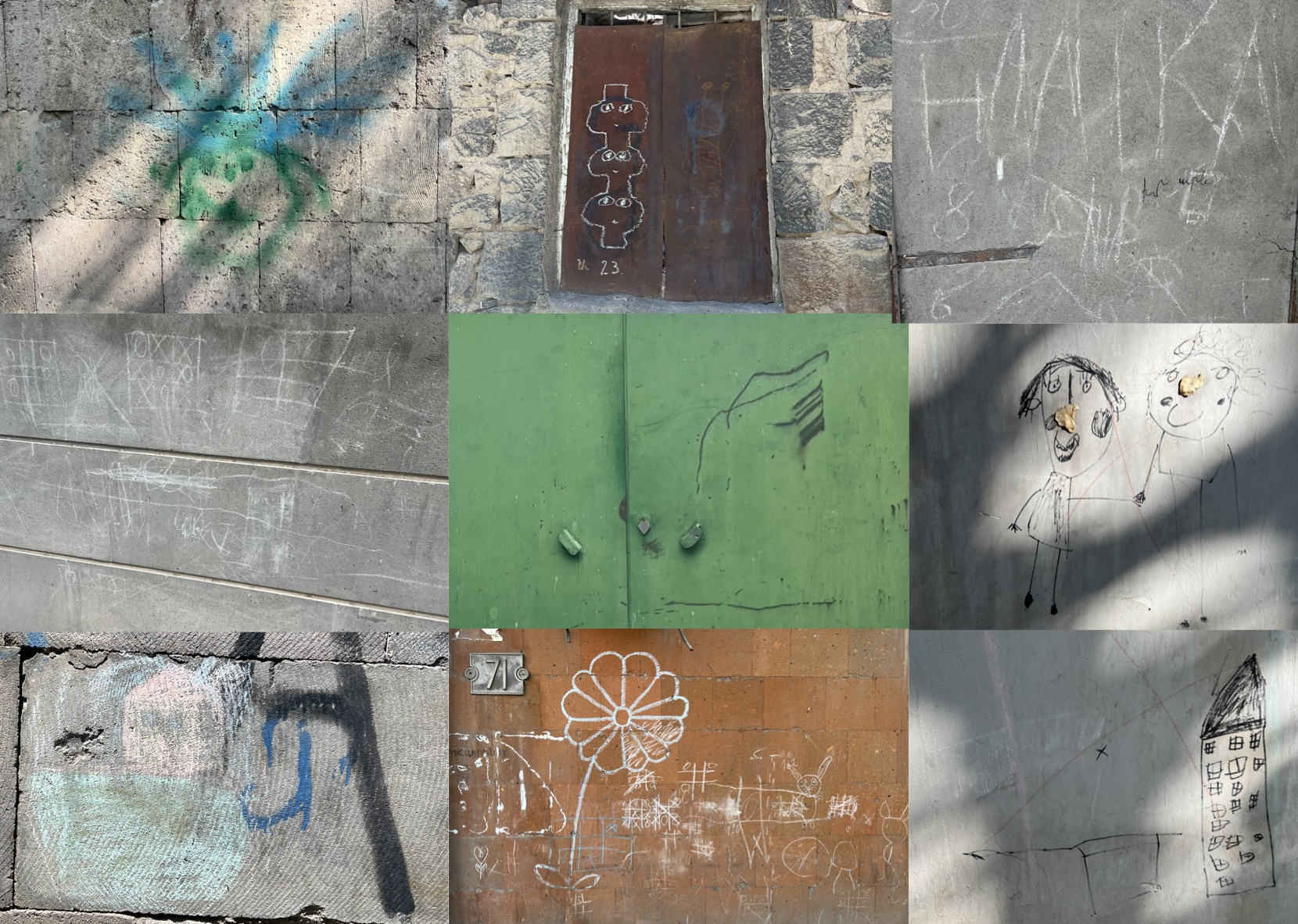
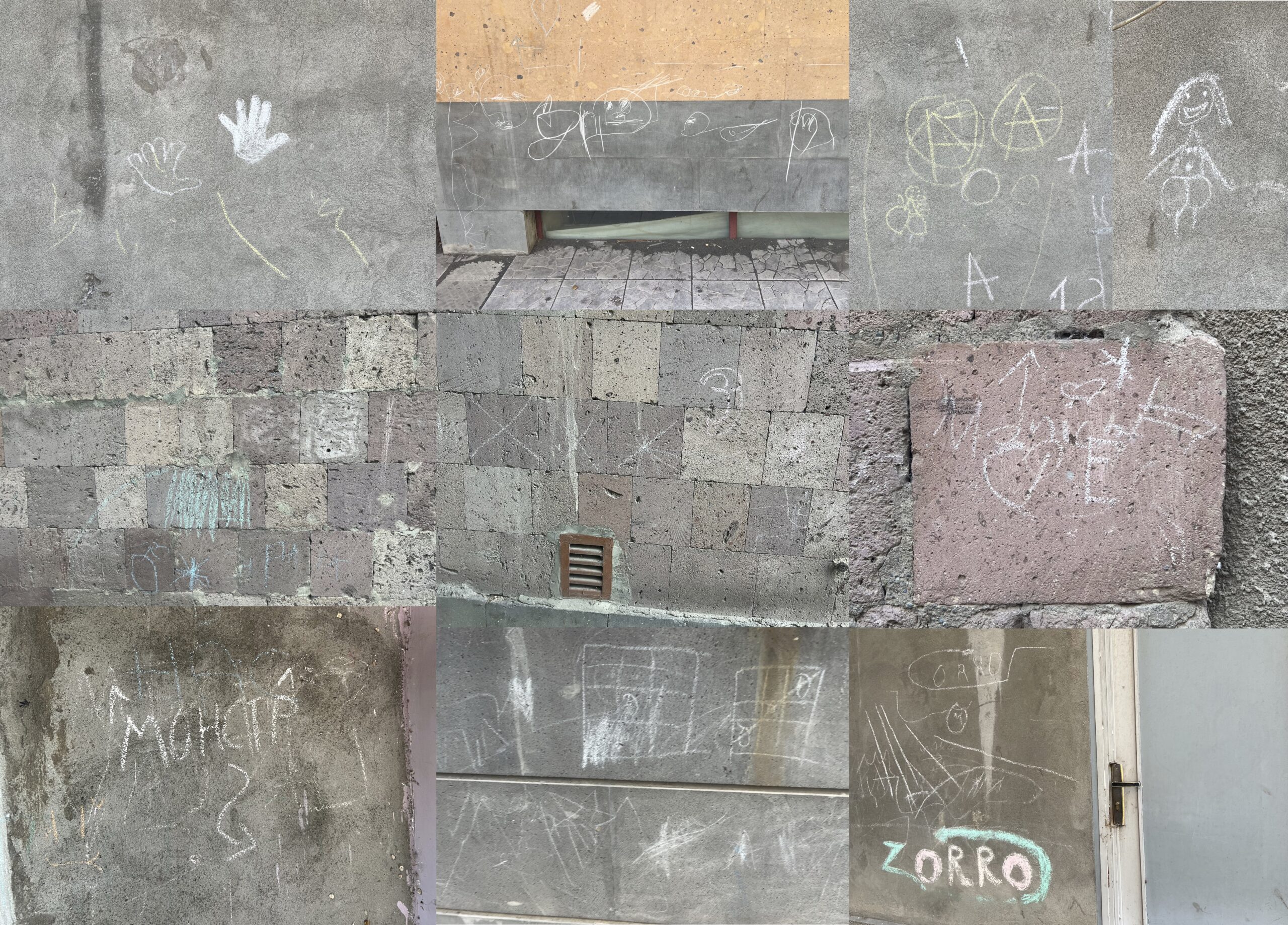
In a gesture of artistic restitution, these canvases have been returned to Arabkir. Rather than exhibit them in a gallery, Rita and I imagined a pop-up urban exhibition, placing her works inside everyday sites: a bakery, a pet shop, a car wash, a cave, and a playground. In doing so, Rita closes the circle of exchange: what the city gave her, she gives back. As open invitations, her canvases are placed in a “living gallery”, waiting to be seen, read, ignored, just like the ephemeral signs that first inspired her.
Veronica Boer
Intern at ICA Yerevan
Check out our Instagram reel about the pop-up urban exhibition ↓