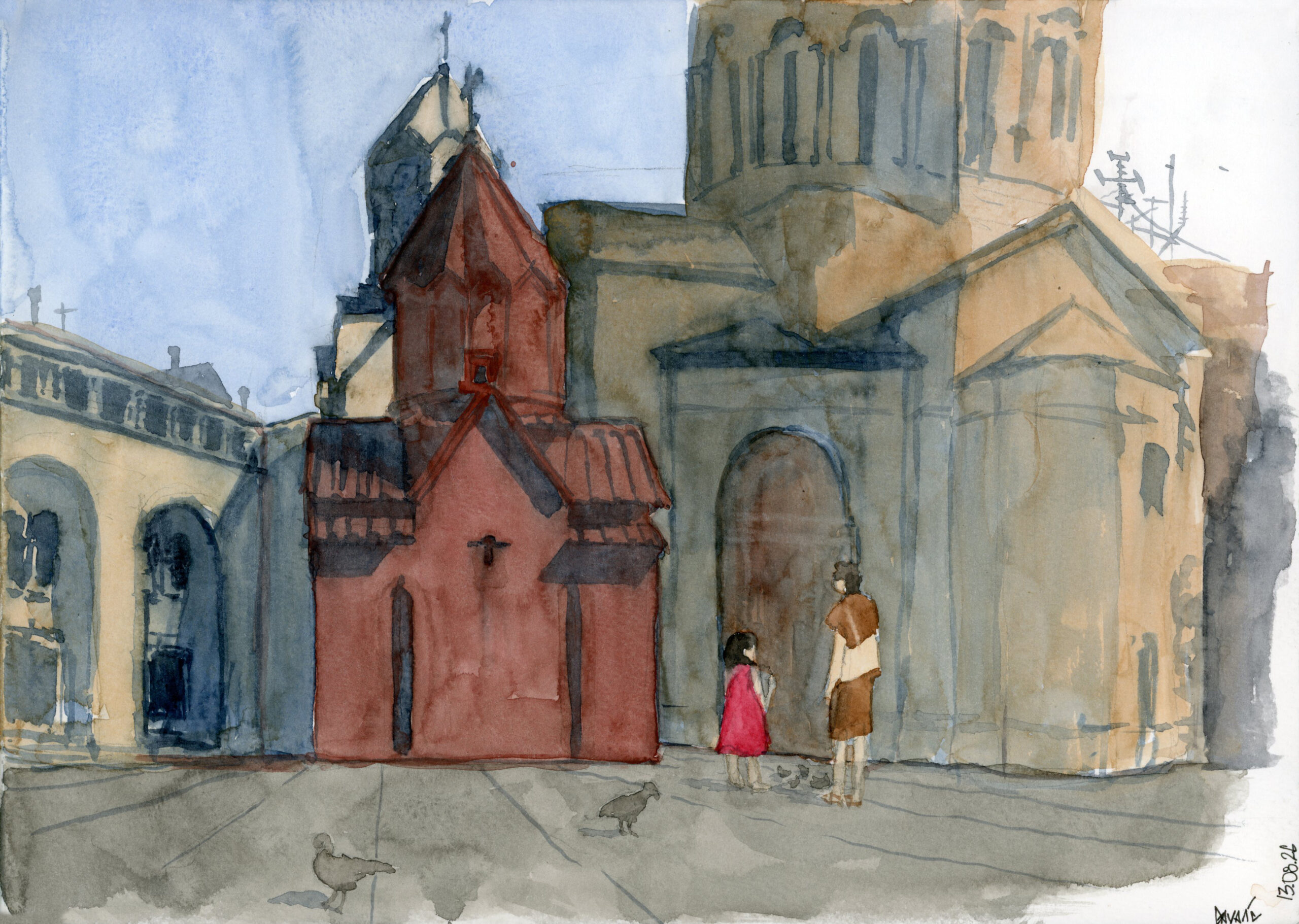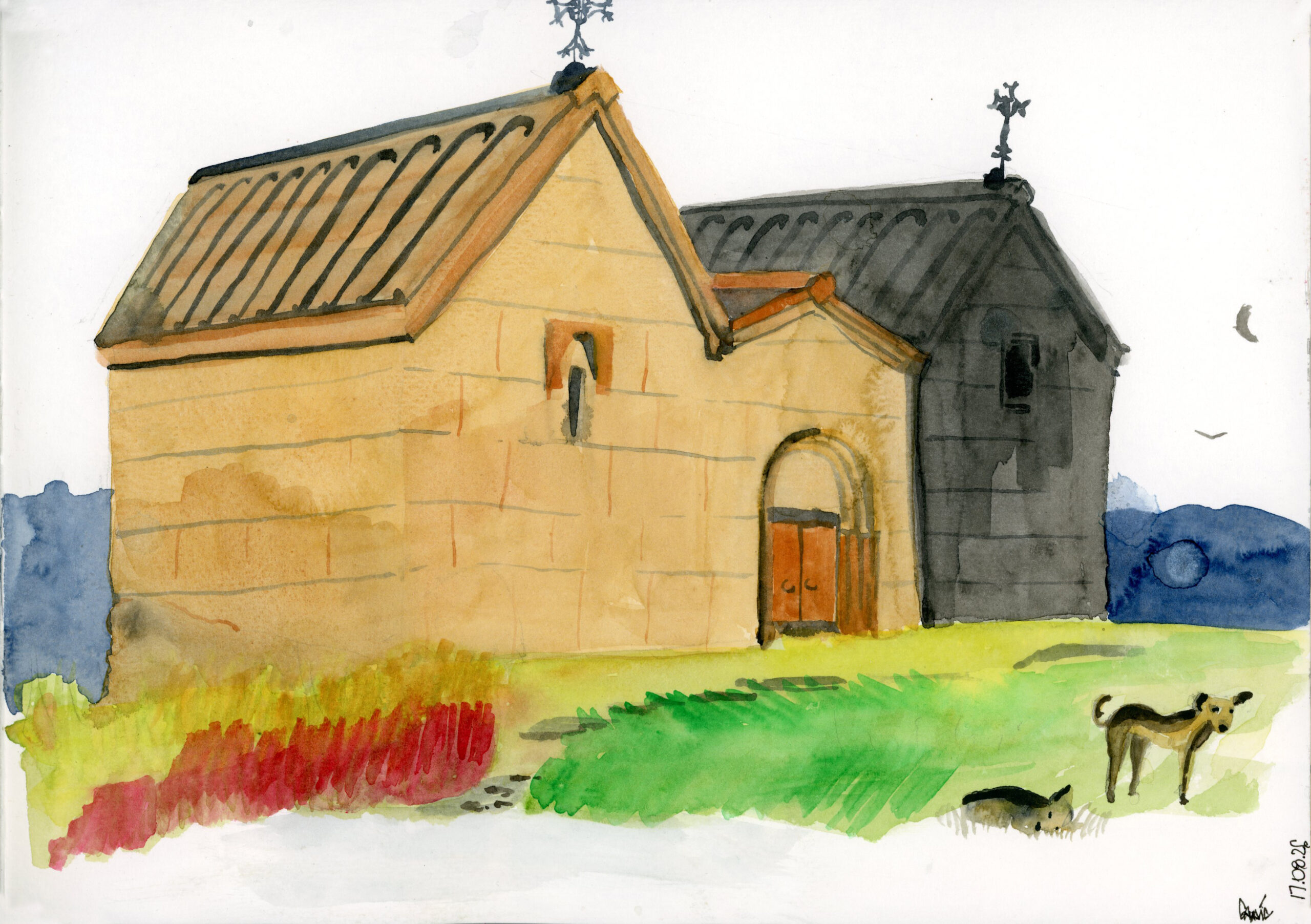
During a one-month residency at NEST, French-Armenian architect and drawing artist Gayané Djeranian turned to her sketchbook to navigate the space between imagined identity and lived experience. In this personal essay, she reflects on memory, the physicality of sketching in the streets, and discovering Armenia beyond the idealization.
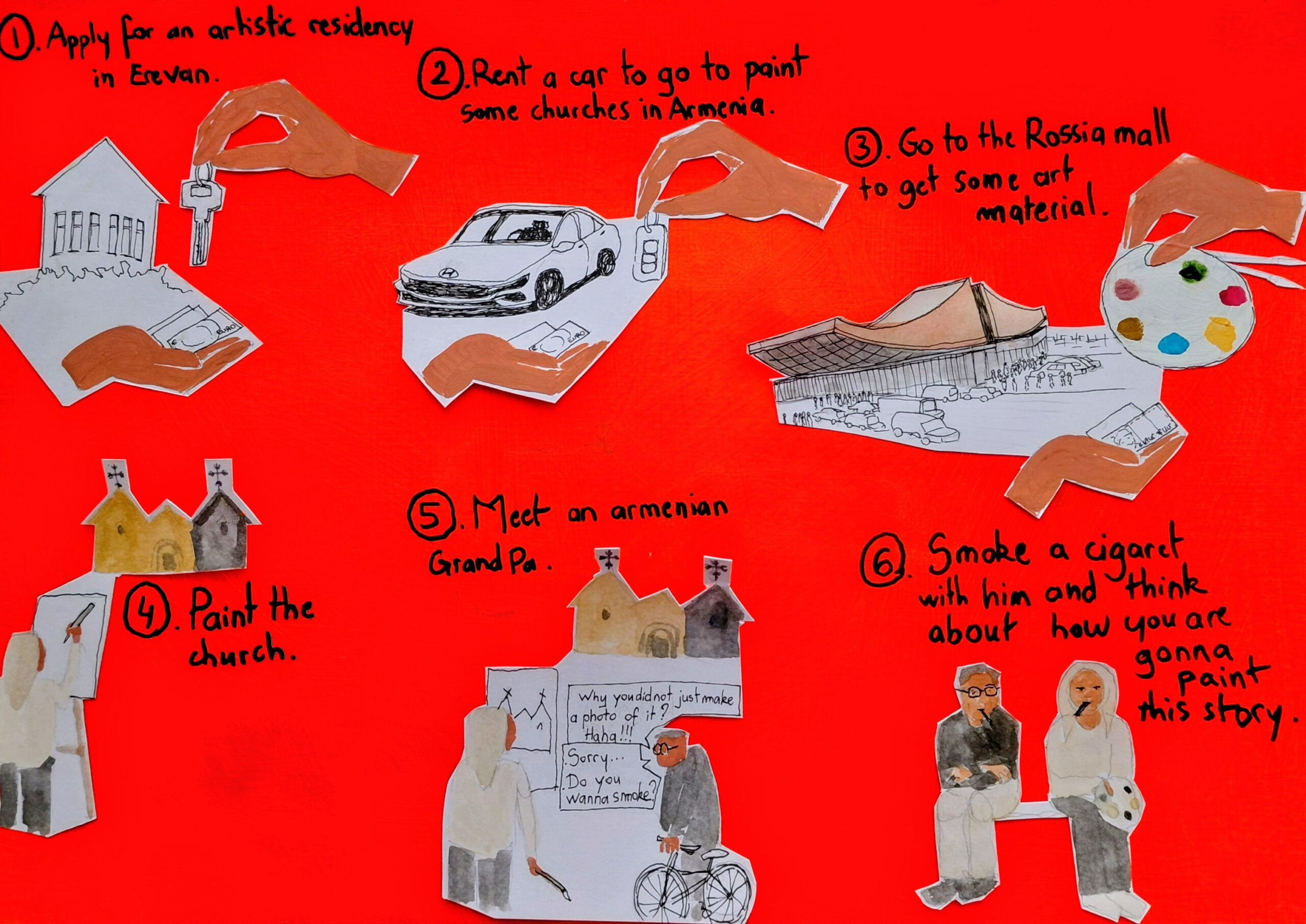
“I didn’t know much about Armenia, but after the Artsakh war, starting in 2022, my family and I began visiting once a year with my father. That was when I started sketching buildings, streets, and everyday scenes. As I explored and drew, I mostly focused on Yerevan’s city center during my recent visits. Eventually, I decided to apply for an artistic residency to venture further out and discover more places across the country.
As a French-Armenian of the diaspora, I grew up surrounded by many images of what Armenian identity means. Because my family members left Armenia at different periods, they passed down fragmented memories of the country as it existed before their migration. Movies like Mayrig and Voyage en Arménie, along with other films I watched later in life, further shaped this identity.
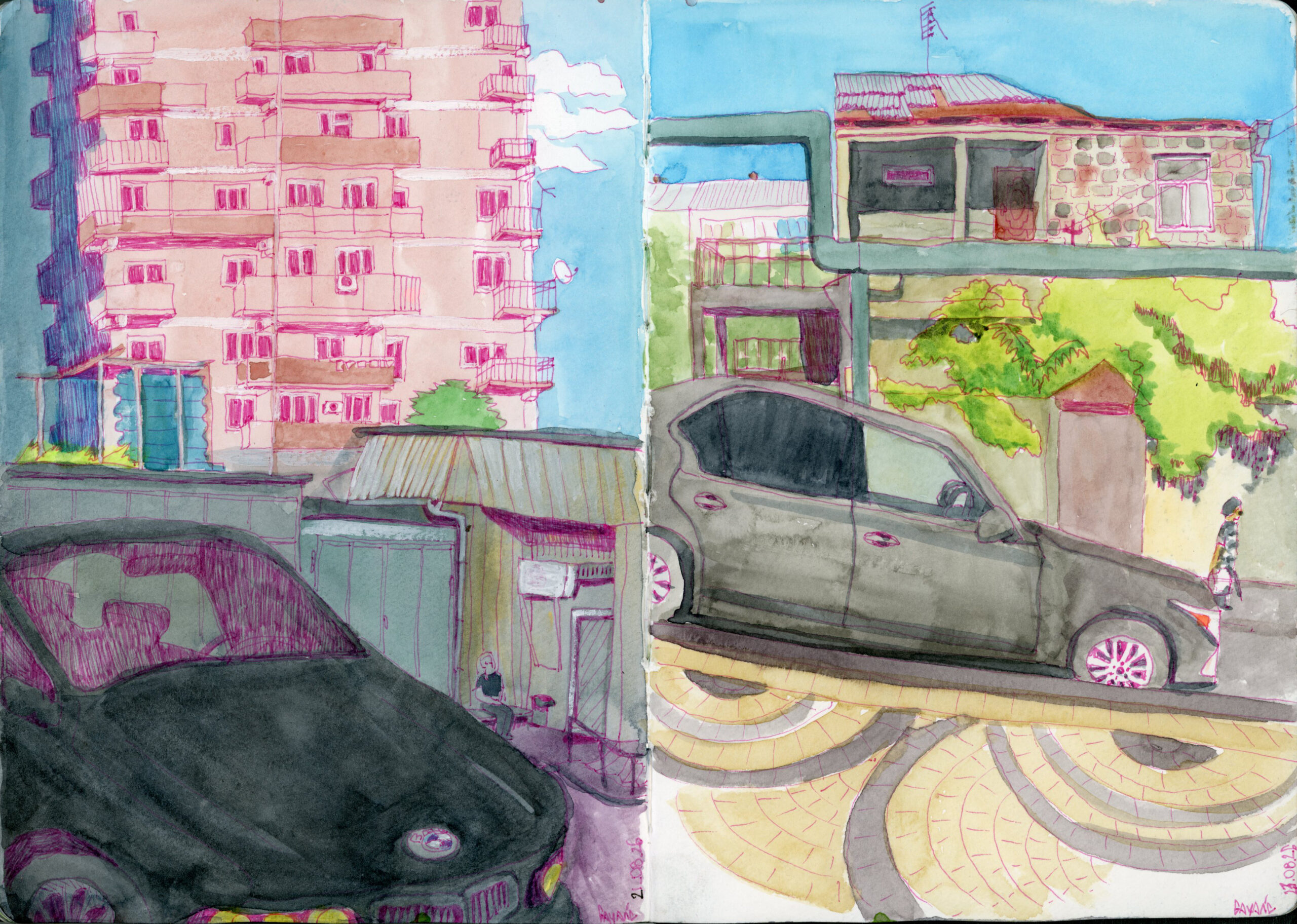
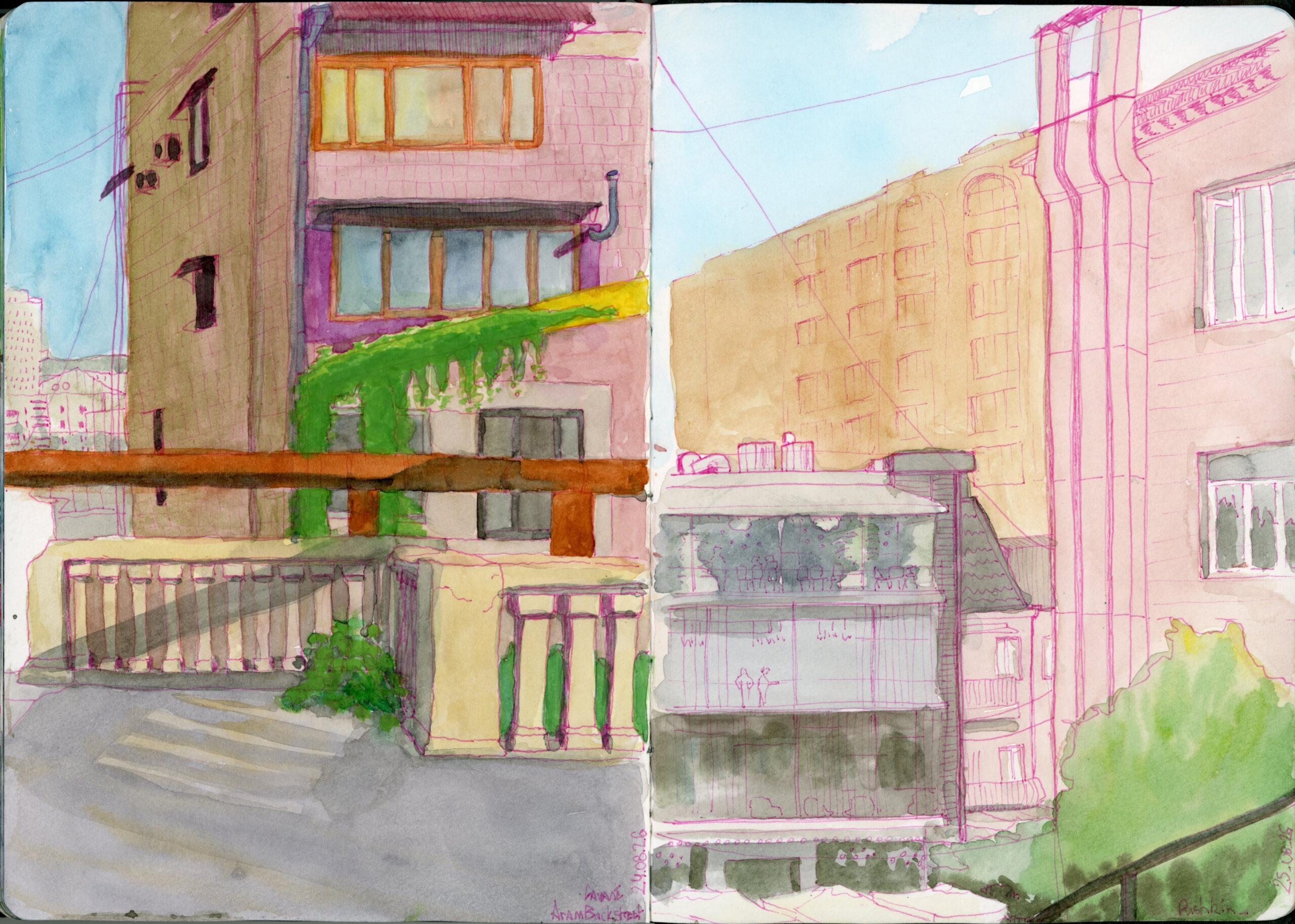
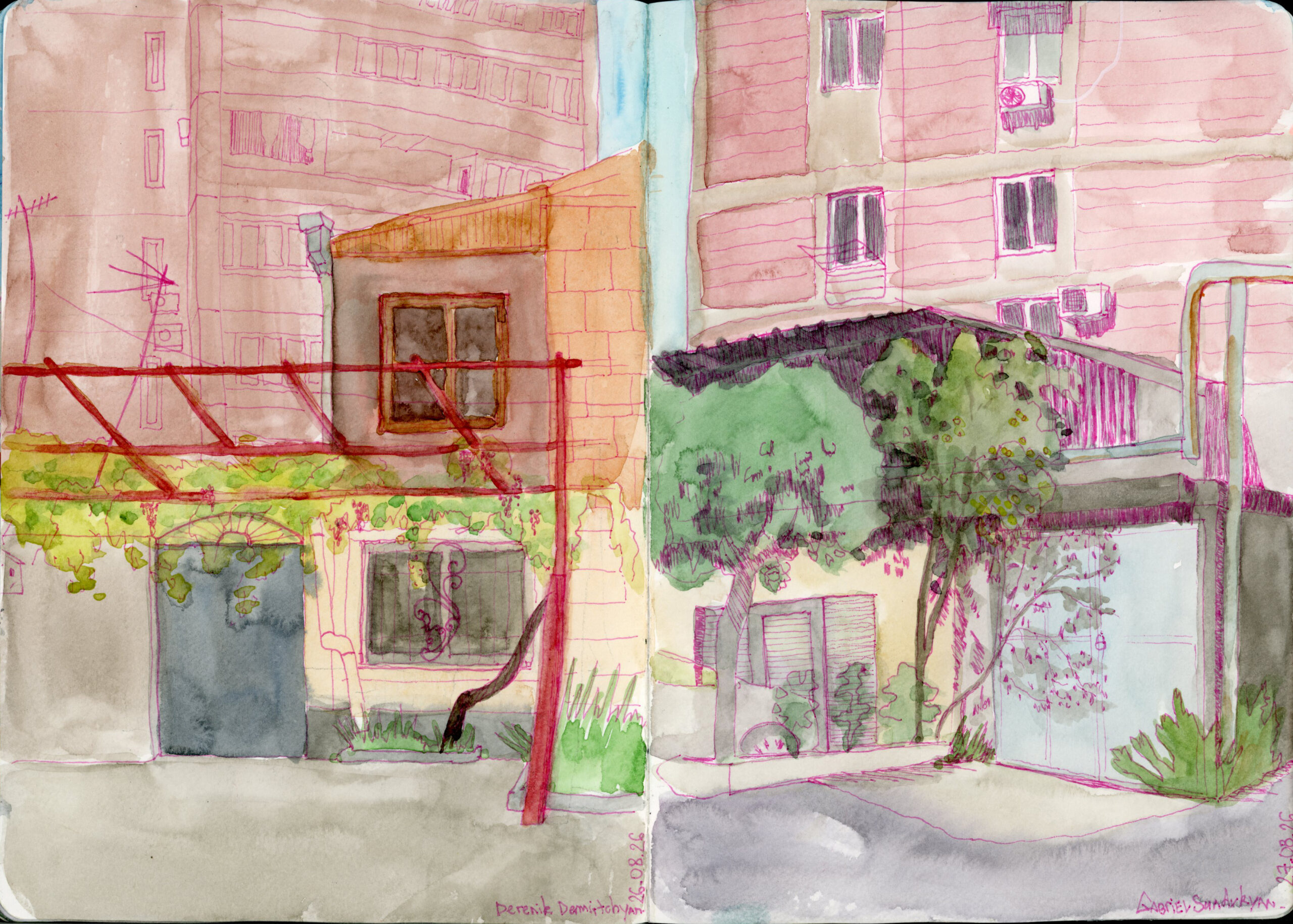
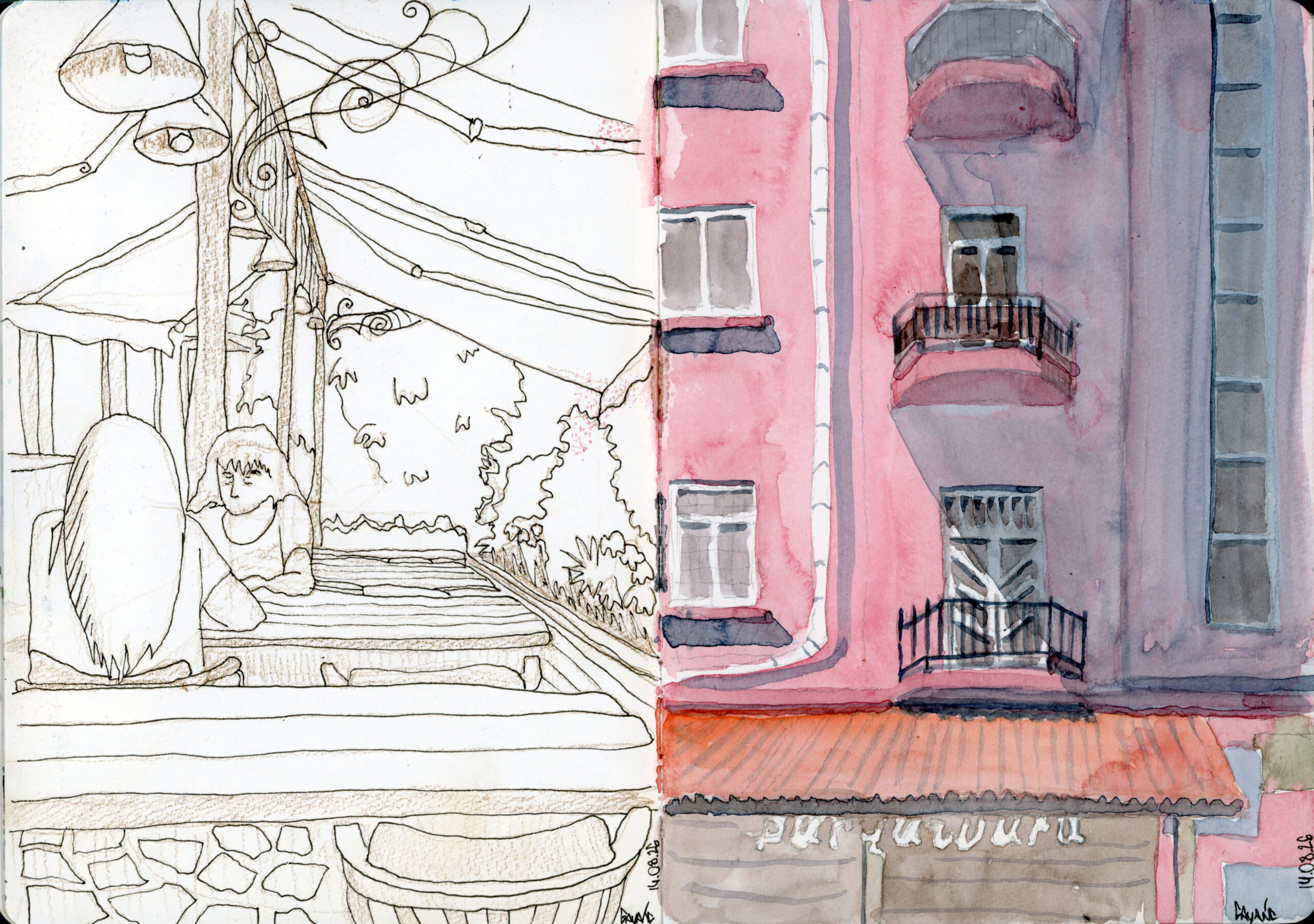
Little by little, I built an image of what it means to be Armenian in my subconscious—though I always knew this image was incomplete, and perhaps even romanticized in certain ways. That is why I wanted to confront a different reality through my painting while staying in Armenia in 2026. Being there, painting the scenes I witnessed, and trying to capture my actual experience of those places was deeply important to me.
Yet, when I looked at my finished paintings, I realized that the subjects and scenes I chose might still be somewhat “cliché.” It seems I will always be guided by my background and by how I had imagined Armenia, rather than strictly by how it is in reality. My perception of reality may always be influenced by the images stored in my mental library; I cannot escape the condition of who I am. However, I can continue adding new images to that library, and in doing so, build an understanding that is truly my own.”
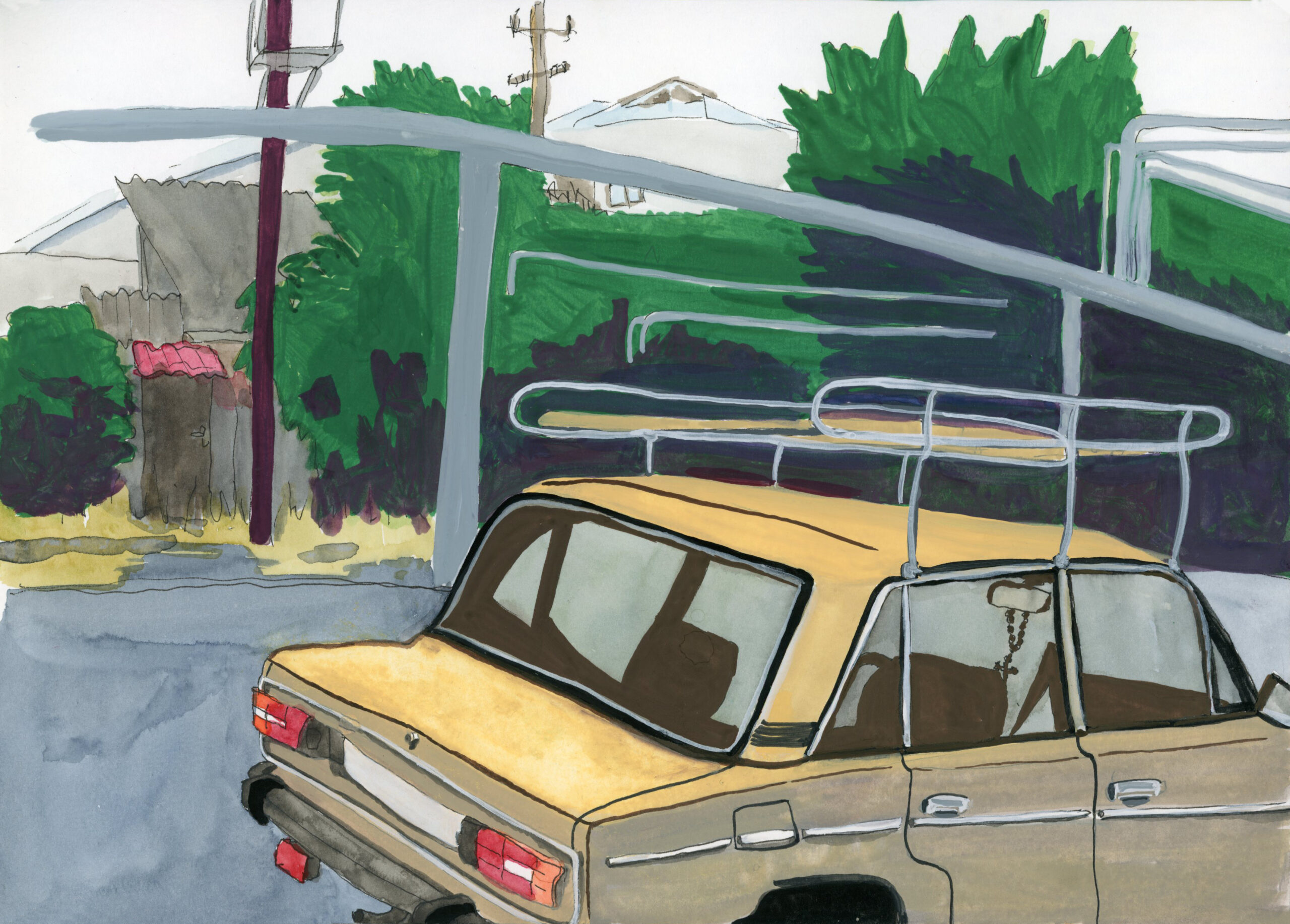
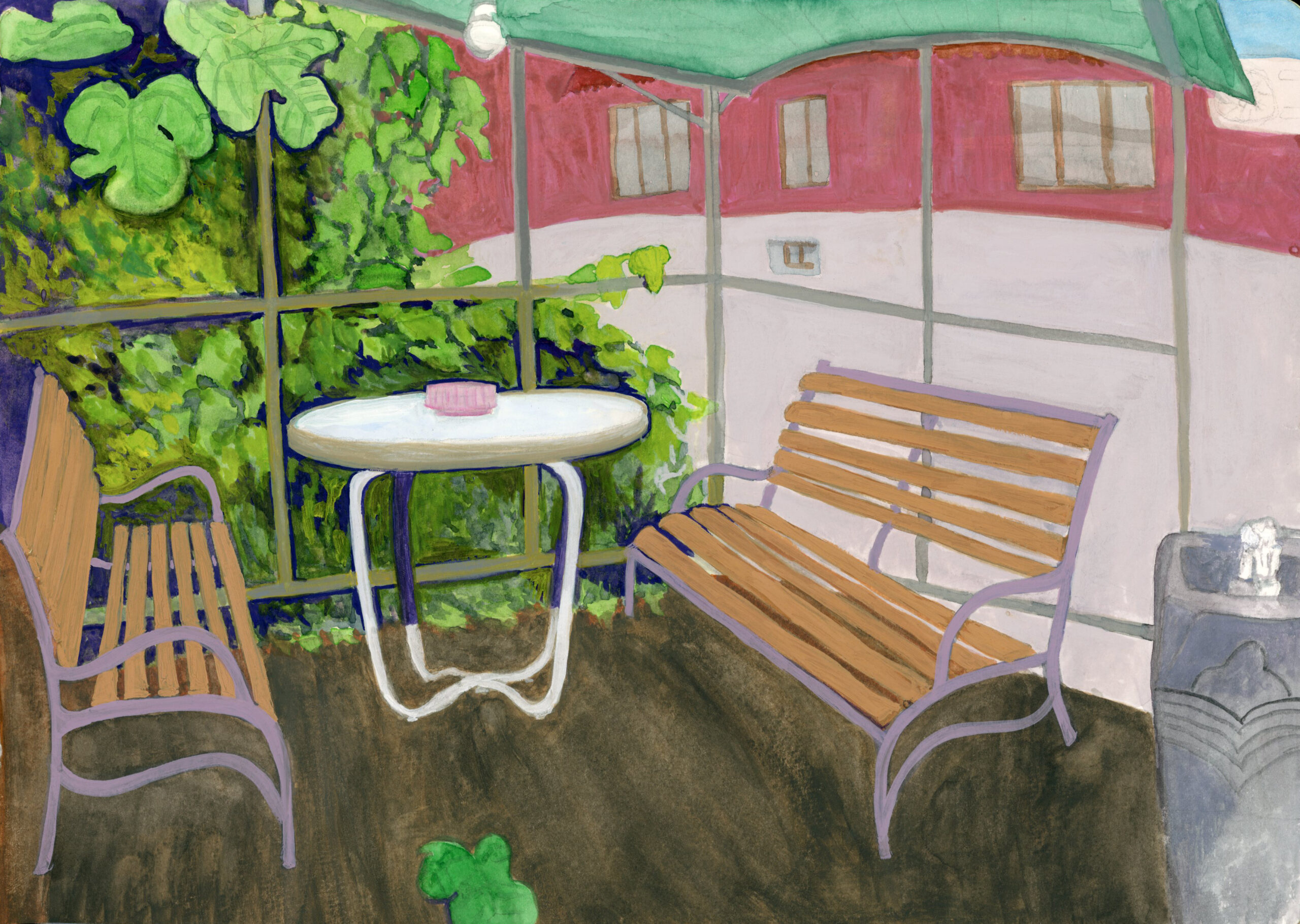
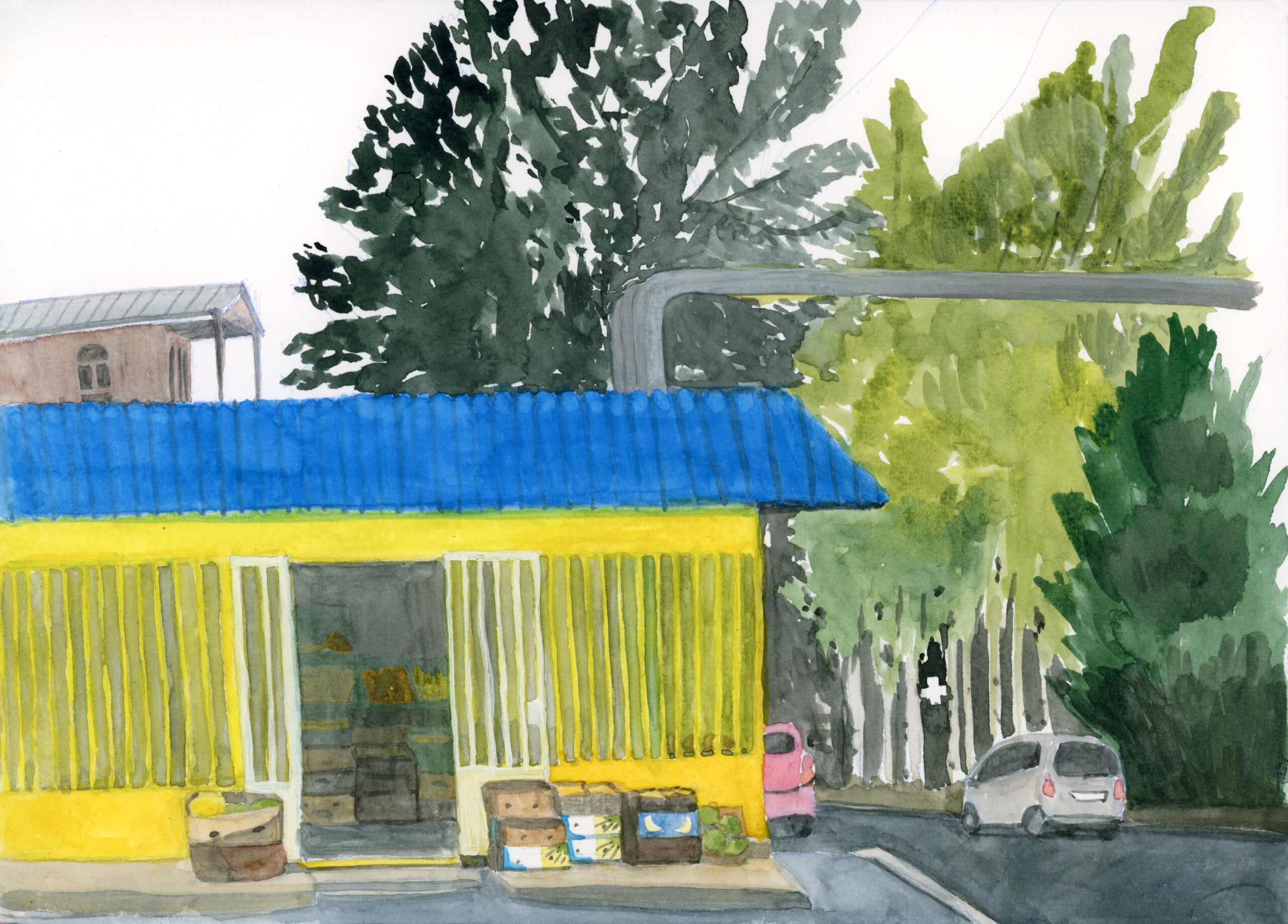
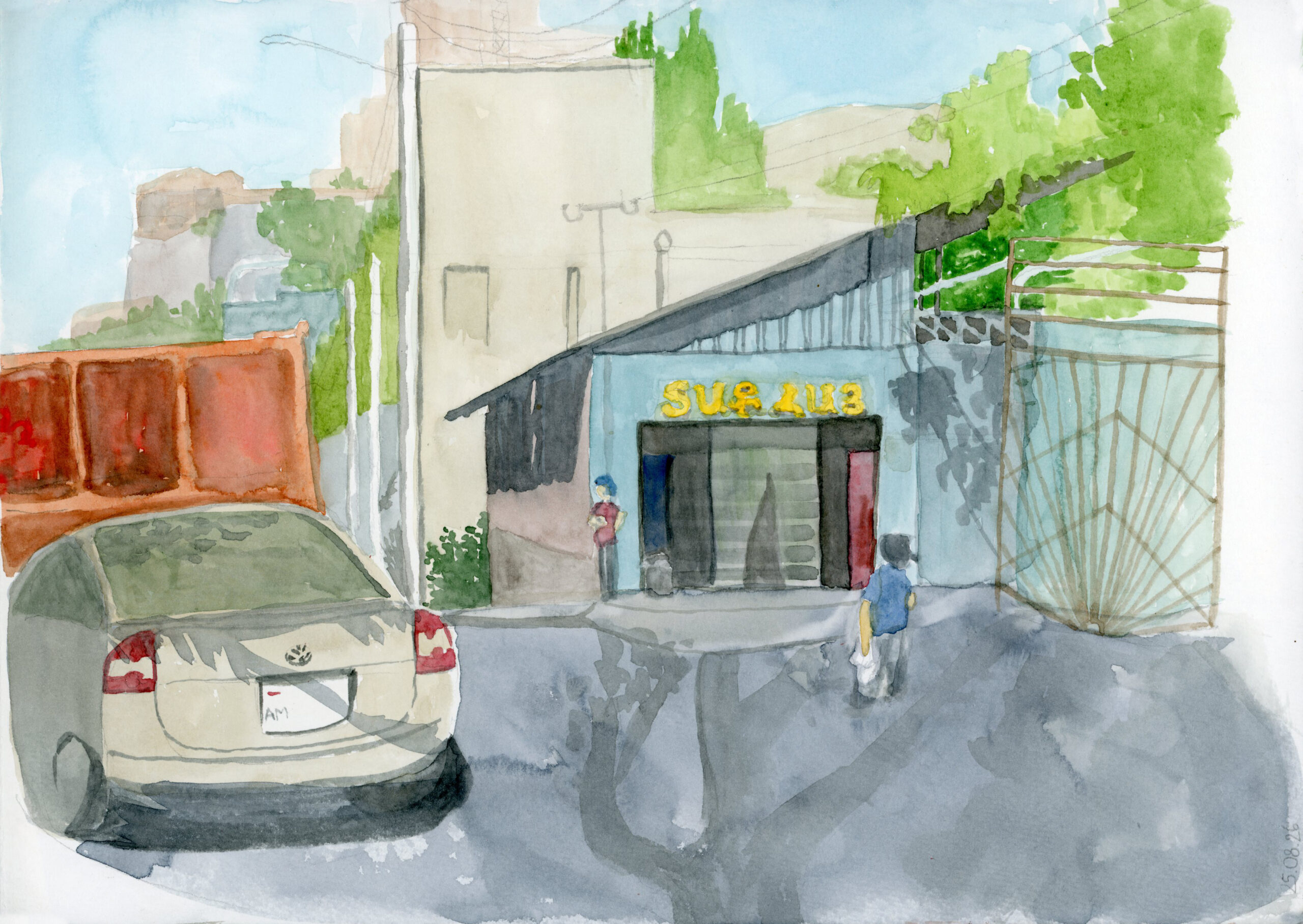
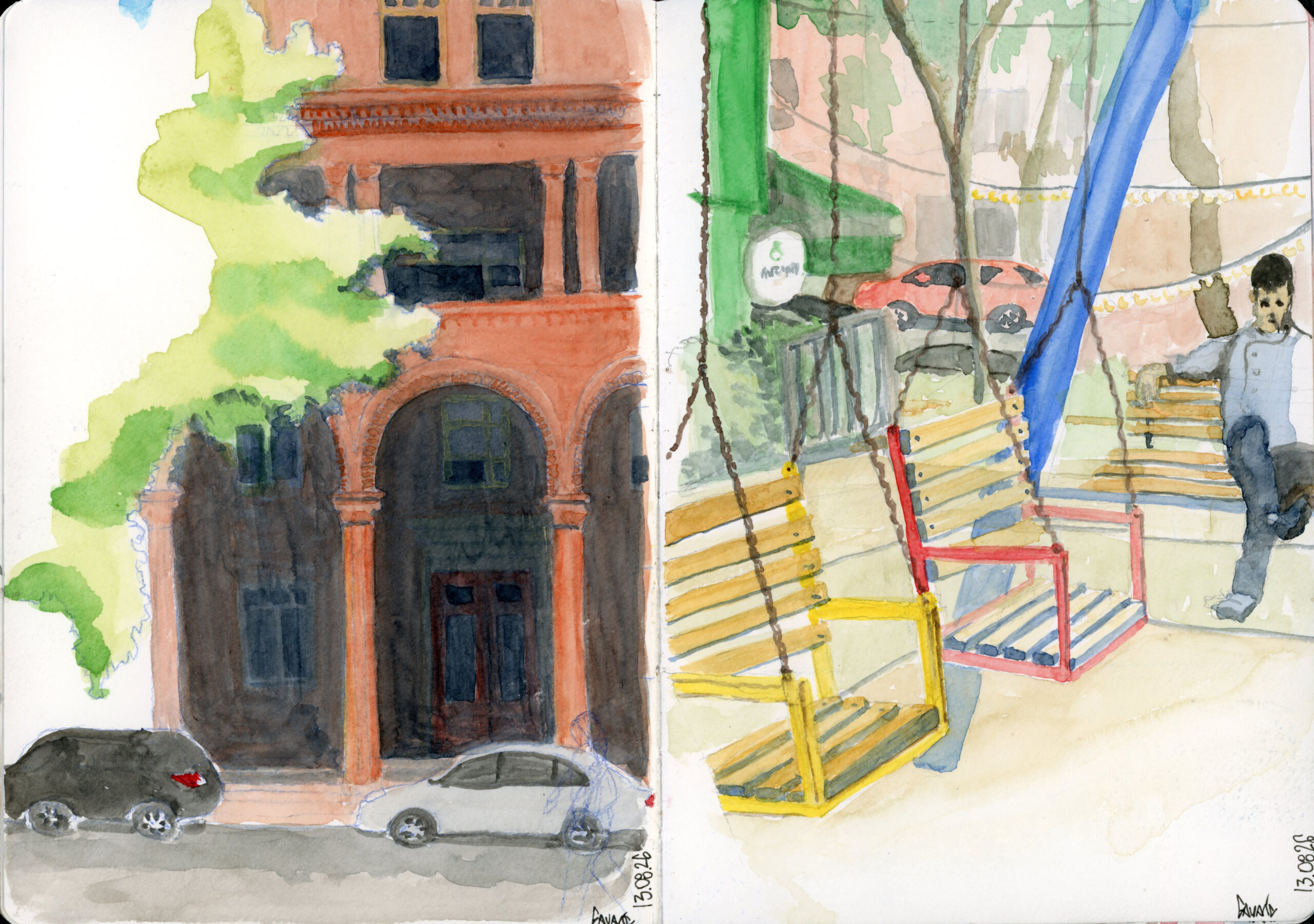
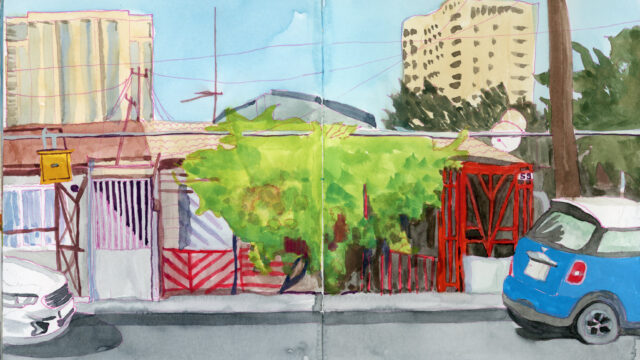
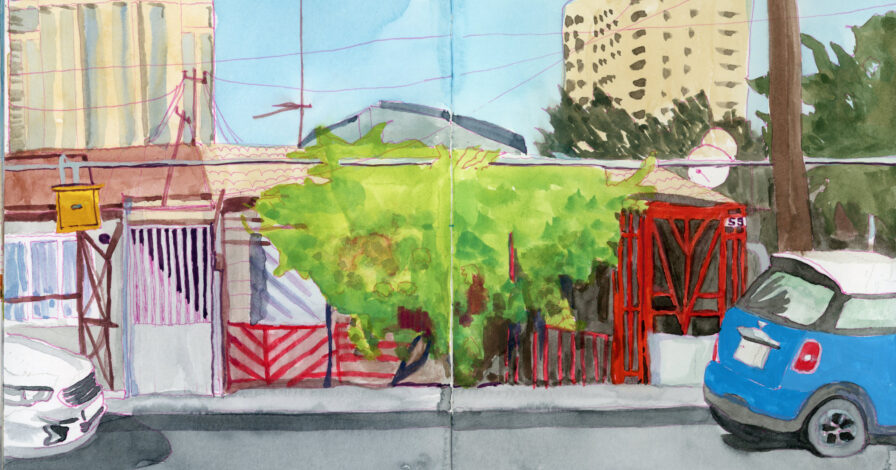
“I became fascinated by how we show our identity and protect ourselves behind our gates. By drawing the streets, I noticed how people express who they are through the aesthetics of their homes. Sometimes, when people live in housing that is difficult to personalize – like impersonal, standardized buildings – they use cars or clothing to express themselves instead. I especially like drawing cars on the streets in Armenia; to me, they are an important symbol of social status, but also a space where people like to linger.”
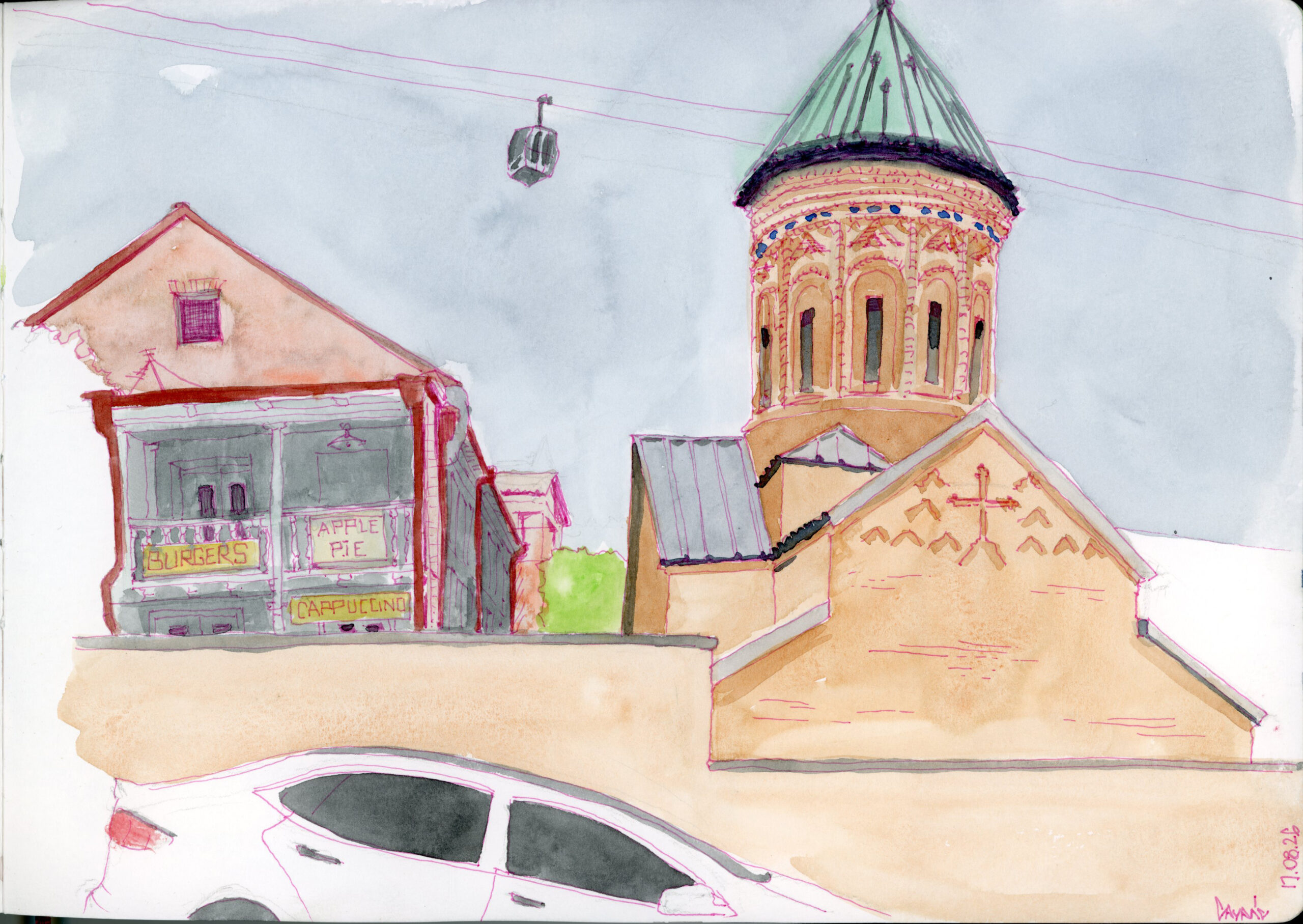
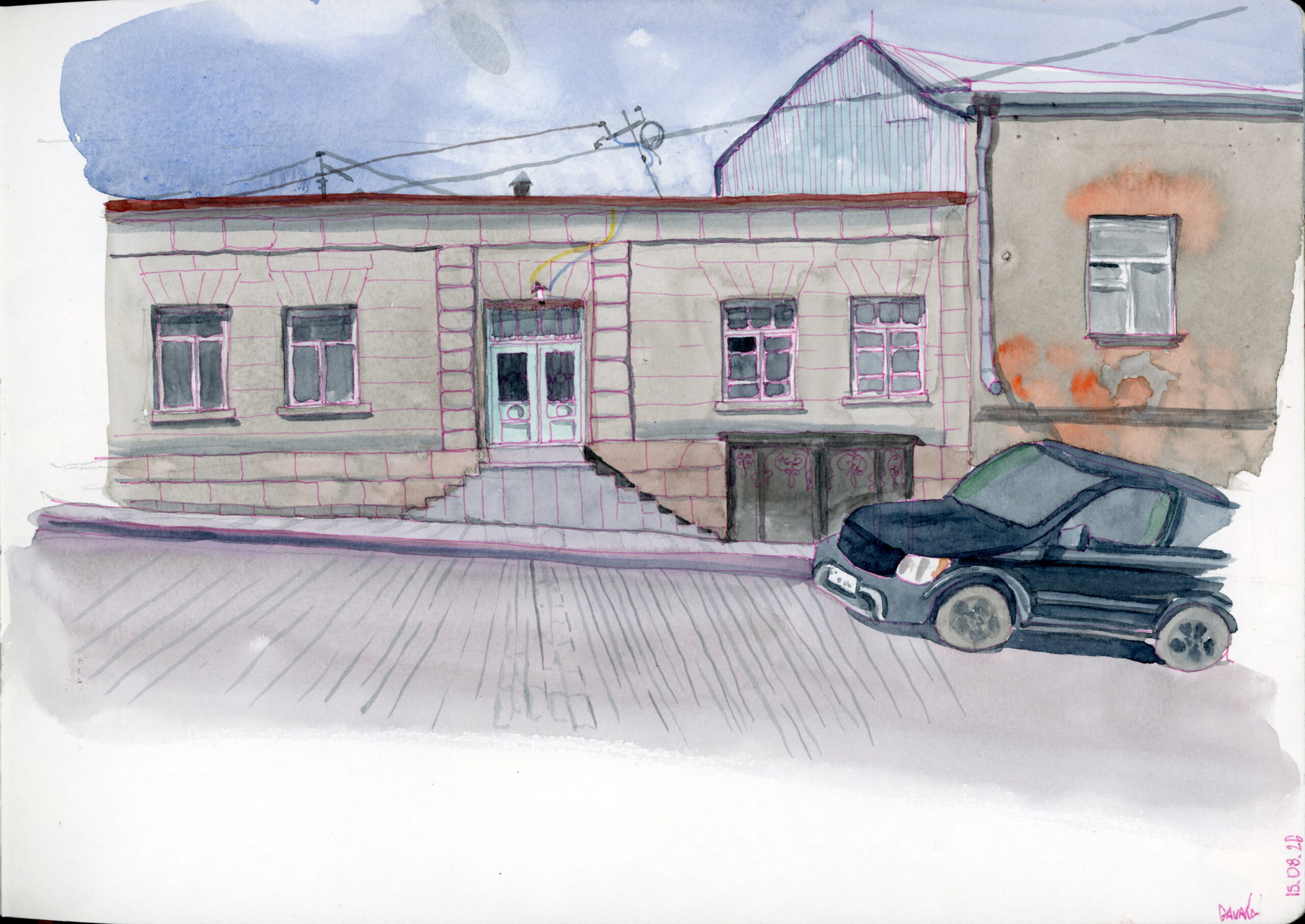
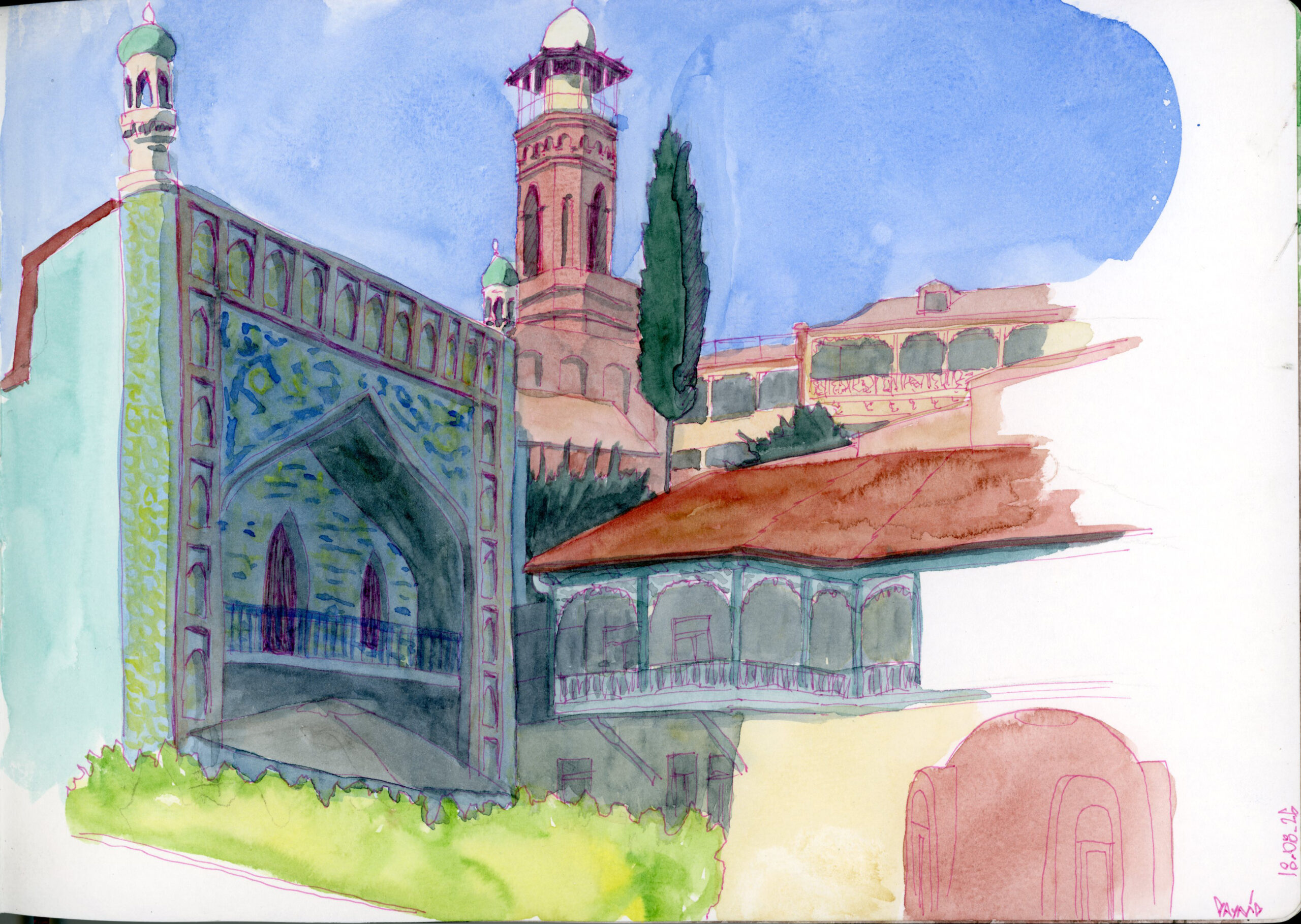
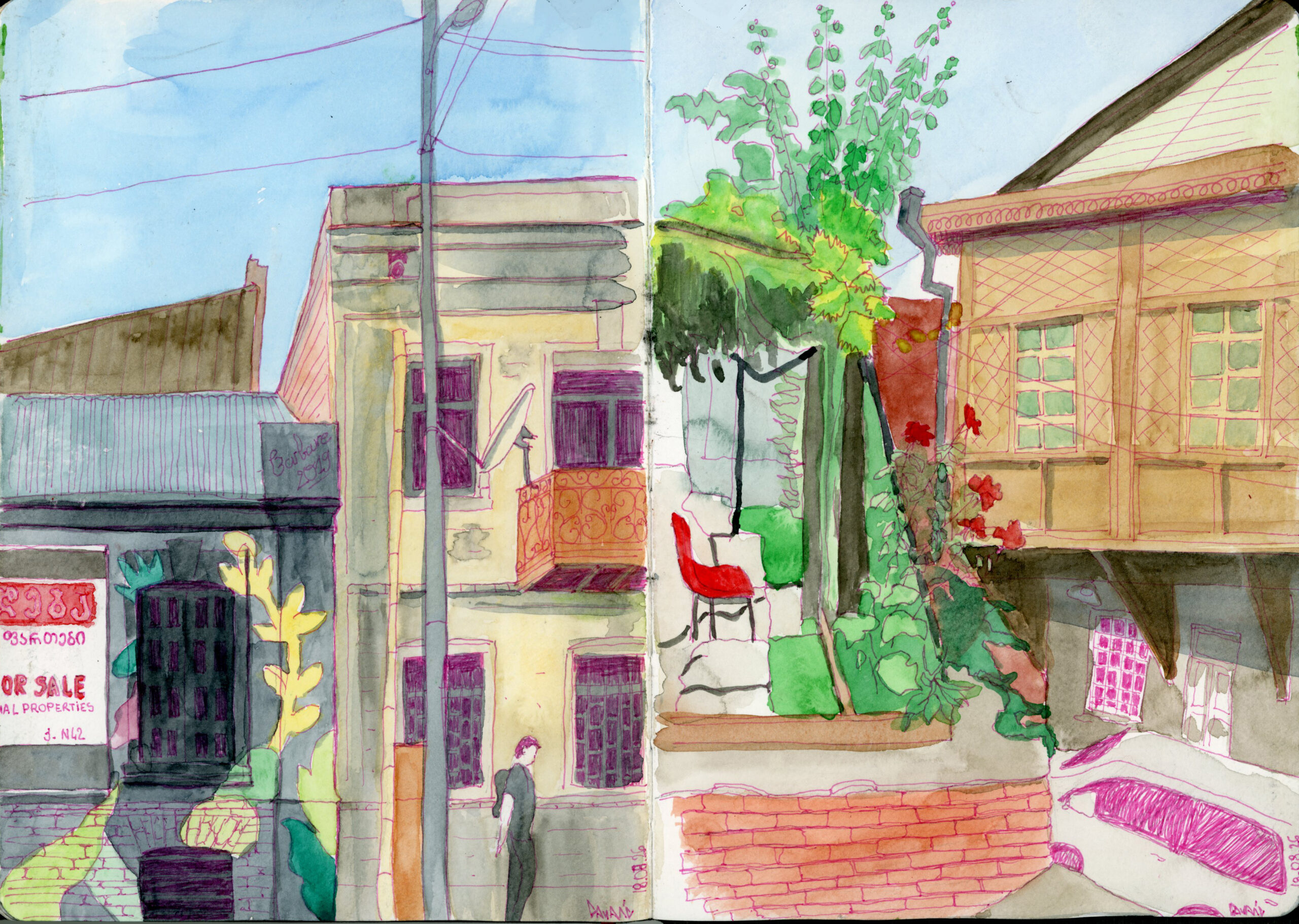
“An Armenian painter friend told me that she went to France for a short visit this year. I asked her how it was, and she spoke of a bittersweet experience, describing the beauty of the cities and landscapes. But one thing that caught my attention was when she mentioned that the sky was much bluer in France than in Armenia. I had always thought the exact opposite.
This made me reflect on how our perception changes when we visit a place for the first time. The sensations feel heightened because everything is new, and nothing bad has happened to you there yet. I have often wondered how I could break through the idealization in my mind and begin my path toward freedom.
First, I tried to test my physical presence in the place I had idealized, and sketching the streets became my way of doing so. Drawing required me to stay on the street far longer than taking a photo would, carefully choosing every shape and color with my eyes and hands. Standing outside for hours meant my body fully experienced the heat of the sun, the lack of comfort, the dust, the smells, and the city noise.
I met the eyes of people smiling at me, others glaring, dogs almost peeing near me, and curious children surprised by what I was doing. An elderly person said to me in Armenian, “Hayeren ches haskanum, vochinch” (“You don’t understand Armenian, it’s okay”); a homeless woman asked me for a coffee and sat down to crochet beside me; men offered me coffee and tried to flirt. All of this shattered the idealization – yet I still found beauty through my own gaze. And the sky is painted last.”